A Standing Date with Diane di Prima
/Every year, for decades, I have read Diane di Prima’s Dinners and Nightmares in November to kick off the festive season.
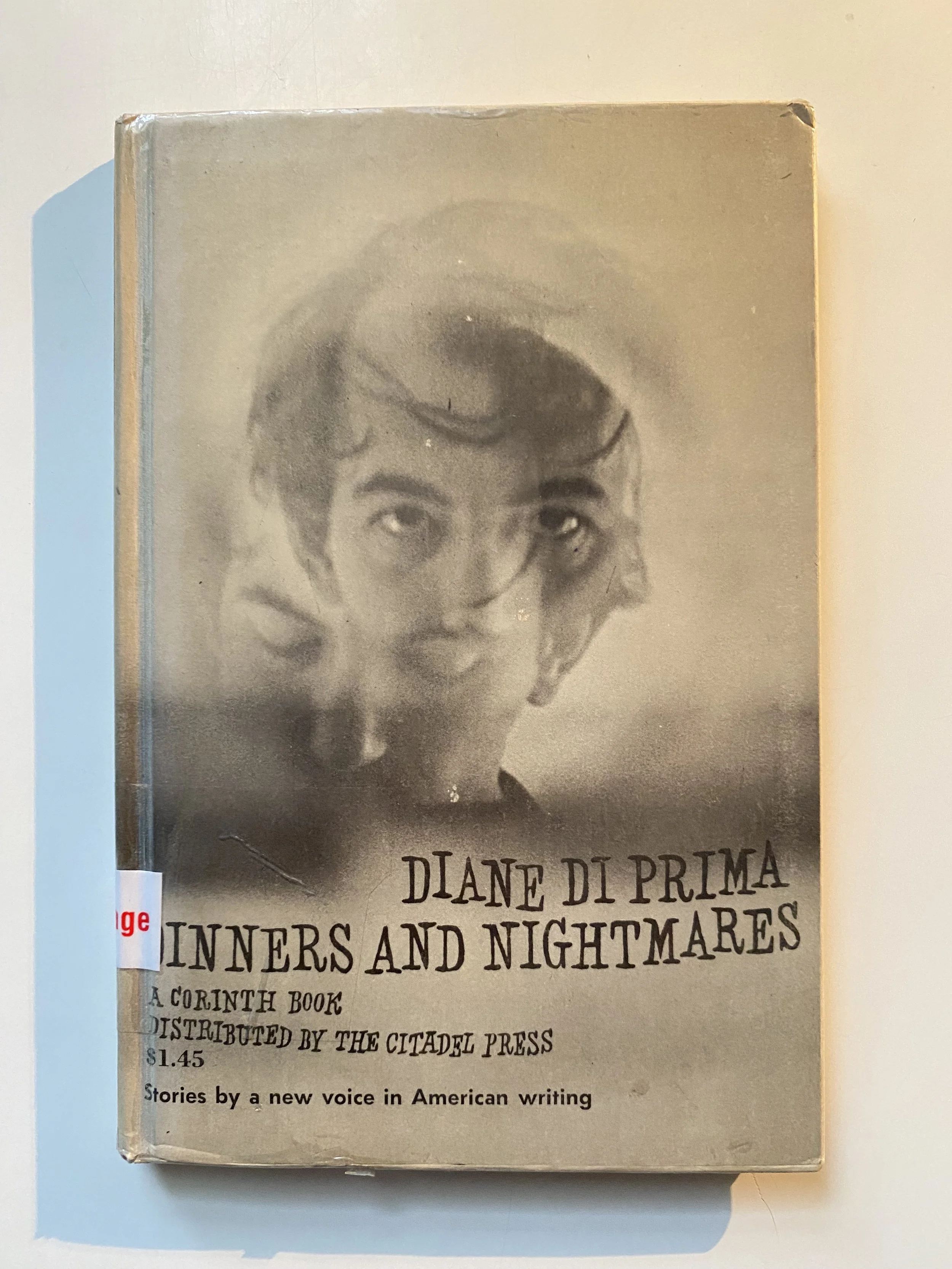
Are these stories? Are these poems? They are a blend of both. They are about being young and living with your friends in Manhattan in the 1950s. No one has money, but they have time to hang out. They are poets and dancers, experimental theater types. They drink coffee and eat a disgusting watered-down stew of potatoes and tomatoes a friend calls “menstrual pudding.” They paint the walls of their apartment a depressing color with cheap paint that leaves a chalky finish. They scrounge for wood on the streets to burn in the fireplace to keep warm, and when there’s no wood left, they burn the cardboard box the wood had been in. Diane (let’s just say she’s the “I” in these poems and prose pieces) pokes it with her foot, and the fire scorches the toe of her canvas sneaker. The writing has these kinds of images that stay with you.
“Two Big Dinners” recounts . . . two big dinners. Diane gets so much food for Thanksgiving she has to put some in the neighbors’ iceboxes. First, she preps the food, then the apartment: “the whole of a livingroom which was a bedroom became a diningroom.” People come and they eat and eat and eat; “people kept falling asleep and waking up and eating.” This goes on for “nine hours.”
For Christmas, Diane makes very traditional Italian dishes. She shops in the Brooklyn neighborhood where she grew up, and goes to the fishmonger, picks out an eel, which the guy bashes on the floor to stun it before chopping off its head. “People kept coming at all hours and I cooked through all of it,” she says (“not a scrap of eel left, all the too squeamish people succumbed when they had a taste”).
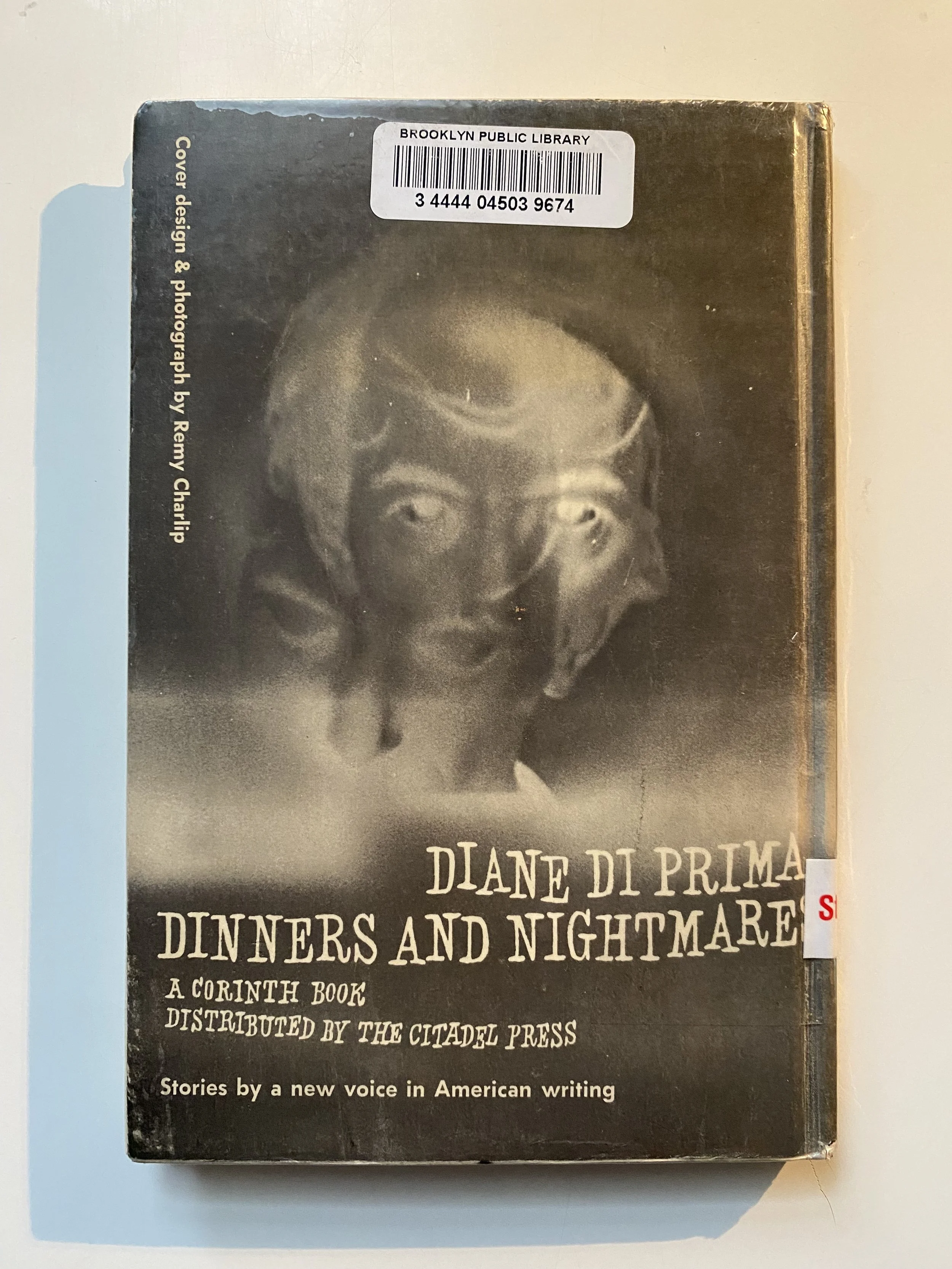
I started this tradition of reading this book every November when I lived in Carroll Gardens. I would take the book out from the library and later found out this was the neighborhood where Diane grew up, which made it that much more special. At the time I was throwing these extravagant parties and had friends over constantly and was constantly cooking and making things out of papier-mâché to wear on my head or to use as decorations. The book got me in the mood to get cracking, even when all I felt like doing was lying around reading in my chair with a cat on my lap and a glass of wine on the floor next to me.
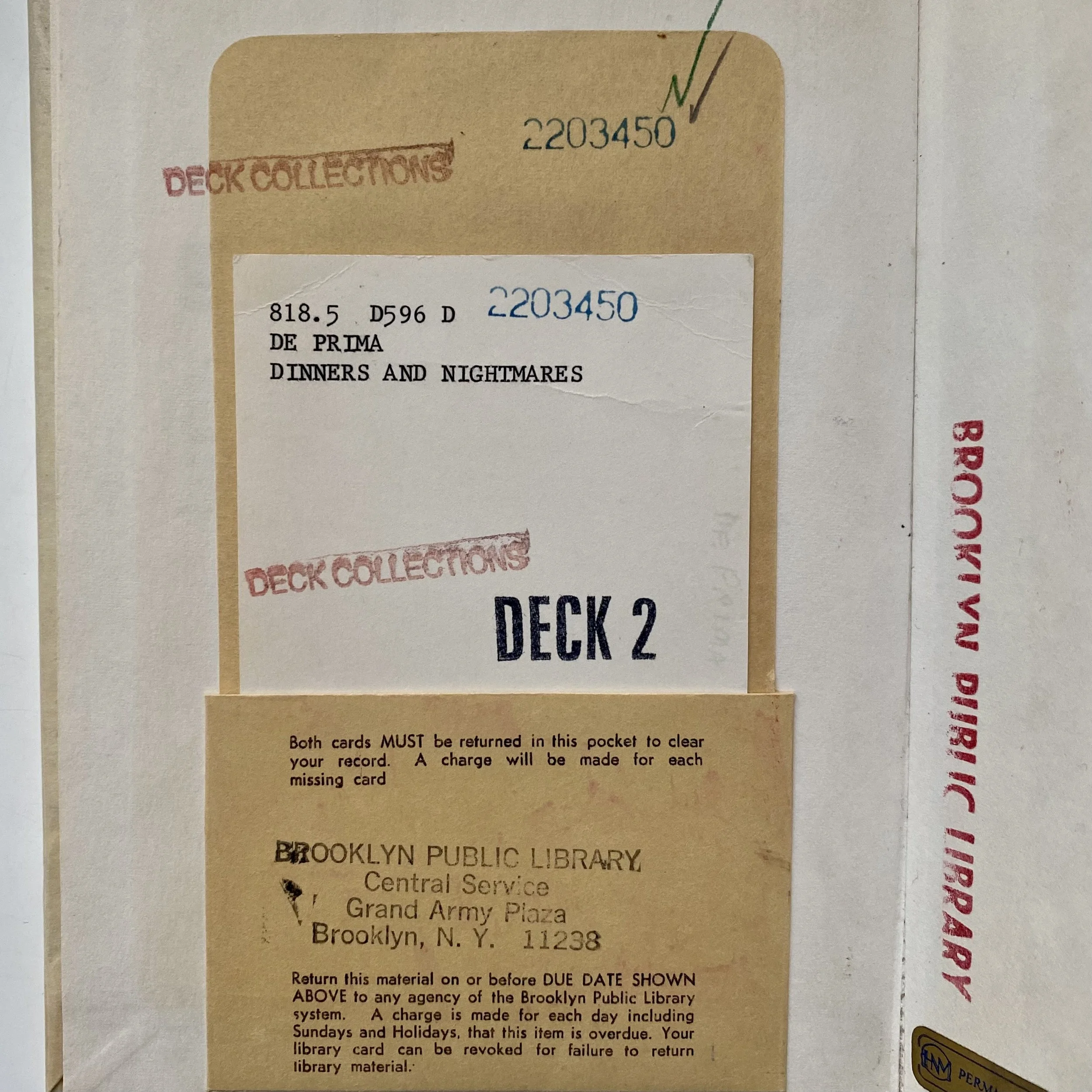
The library’s copy was a first edition, and it had the card in the back from when they would stamp the books. It also had a red stamp in it that said “Stacks,” so I imagined this was a book that nobody took out too often. I figured I was the one person who kept it in circulation by requesting it annually. One year, The New York Times invited readers to share their holiday traditions, and I volunteered mine. The following year the book was no longer available.
Did someone read the article and think, oh, that sounds like a good book, I’m going to take it out, then see that it was a first edition and steal it? Sometimes I thought about stealing it myself because it was amazing. This little hardcover book with this black-and-white photo of Diane, this card in the back. It was so cool. But it’s totally not the spirit of the library to steal something. The library is for everybody. The books are for everybody. The way I saw it was, if I stole this book, I’d take it out of circulation, and then no one else would ever discover Diane di Prima. And then I would just have this book on my shelf like something sneaky that made me feel terrible every year I opened it. So that preemptive guilt kept me honest.
But now I’m kind of sad I didn’t steal it because the book’s not available anymore. I have a newer version that actually has more of her work inside it, but I don’t like the cover and I don’t like the font. You may argue, why do these things matter? The words are what matter, and the words are the same. But they don’t feel the same. They don’t look the same. Every year I read it anyway.
I miss the old book, and I miss the old neighborhood. I miss having an interest in parties. I miss being surrounded by friends who were interested in making things, just for the love of making them.
But reading Diane’s words every year is no small consolation.