A Trip Around the World with Krzysztof Kieślowski

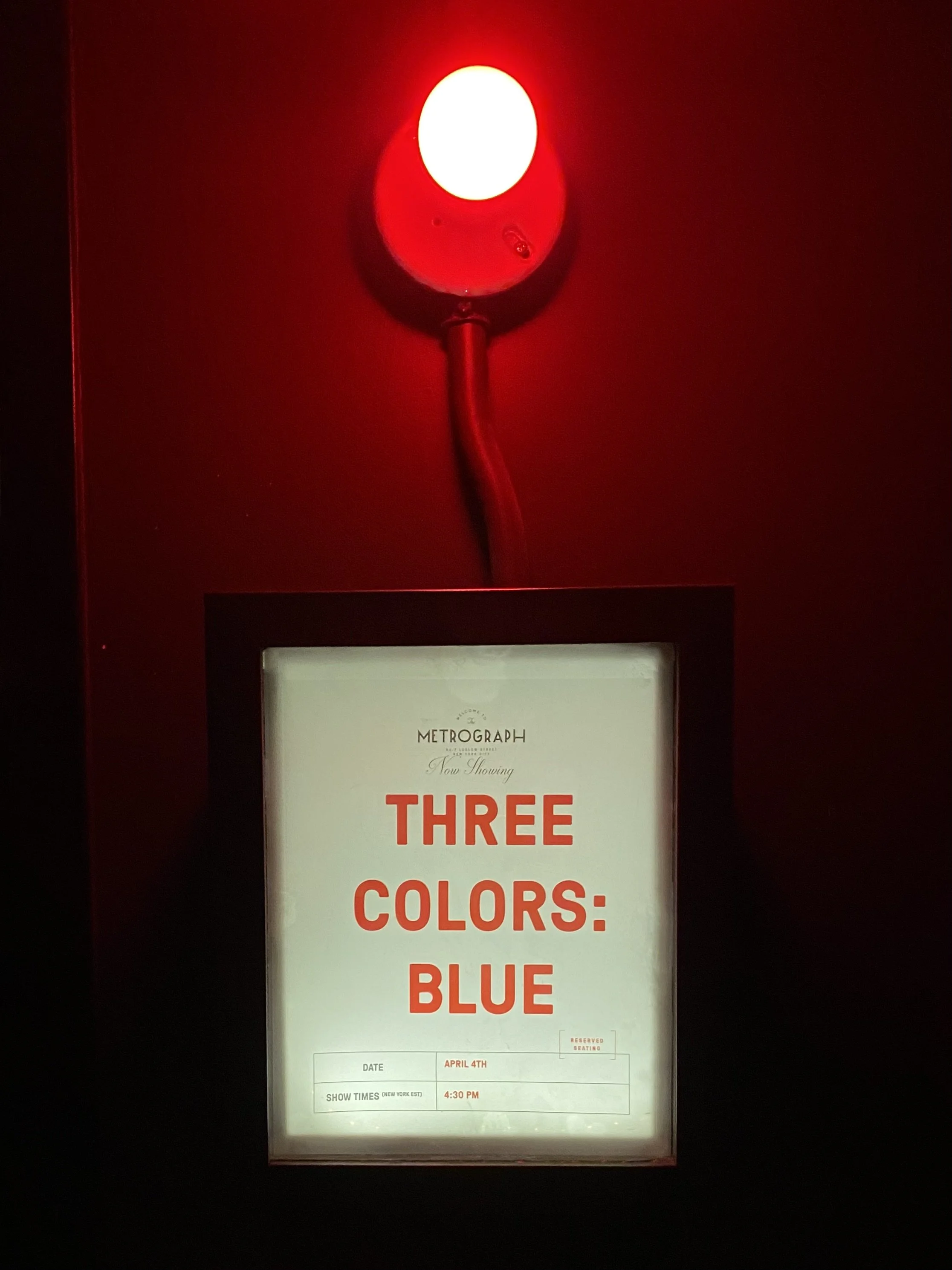
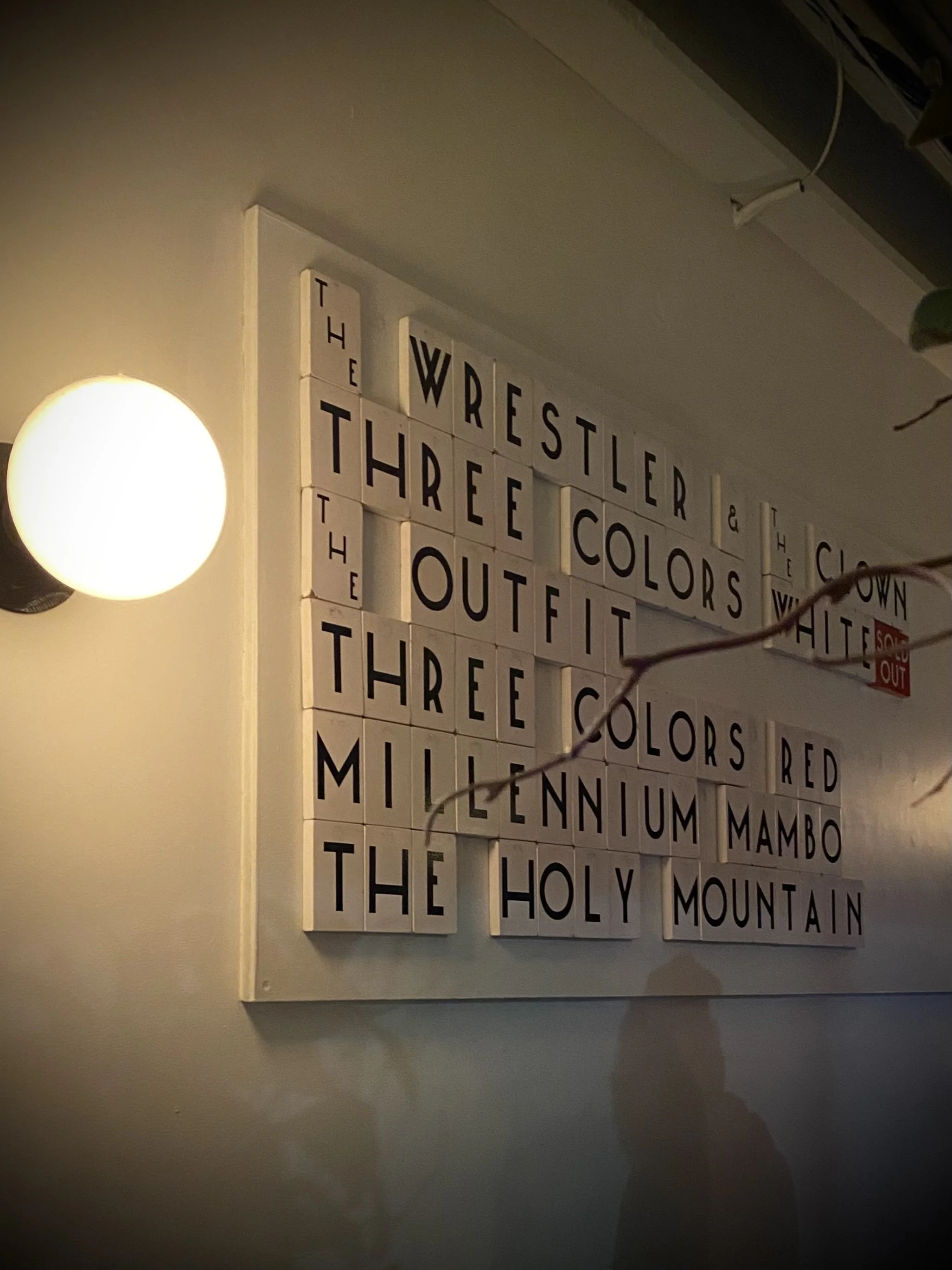
A recent series at New York City's Metrograph movie theater, Moral Mazes of Krzysztof Kieślowski, offered the chance to see the Polish director's Three Colors trilogy on the big screen. International productions co-written with his frequent collaborator, the lawyer Krzysztof Piesiewicz, each film uses as its starting point one of the ideals of the French flag: Blue (1993) tackles liberty; White (1994), equality; Red (1994), fraternity.

The films were shown in the order they were released with only a 10-minute break in between. I've seen these movies before, but never all at once. It felt a bit like a long-distance flight. A trip not just around the world, but to the past.

First Stop: France.


Blue begins with the perspective from underneath a speeding car. A little girl's hand holds a blue foil wrapper out the backseat window, fluttering in the wind. The car stops on the side of the road. The girl scrambles out to pee. The camera is again underneath the vehicle, where something from the car drips, drips.

A few minutes later, the car crashes into a tree.

Father and daughter are killed. The wife and mother, Julie, survives. When she returns home and finds her housekeeper sobbing, she asks why. "Because you aren't," the woman says. Julie knows she can't start because she won't stop.

Blue is about Julie learning to live when she wants to die. Without the people she loves, what's the point of living?

Julie destroys what's left of her old life, freeing herself of any and all obligations. She finds an apartment in Paris where she can live alone and unbothered.

Julie is haunted not only by her memories but by an unfinished piece of music her husband was composing to celebrate European unity. There's a suggestion she may have been the mastermind behind the music. At intervals during her convalescence, the music overtakes her, in sudden blue flashes.

The color blue is used with intention but never overdone. When Julie goes to light a cigarette, for example, she uses a white lighter. Whenever the color does appear—the pool, Julie's navy swimsuit, the blue of her daughter's crystal chandelier—it feels deliberate but still natural.

One night Julie hears a noise, looks out her window, and sees a gang of men beating someone. She soon hears desperate pounding on her neighbors' doors. She resists the urge to open hers—at first. When she does, it's too late to help that man, but she catches the sly grin of her downstairs neighbor Lucille, a sex worker, letting in the man next door. Later, when the neighbors turn on Lucille and circulate a petition to have her evicted, Julie refuses to sign.

Lucille interprets this wrongly as an overture of friendship. But Julie finds herself beguiled by Lucille's lack of inhibition. "I never wear underwear," Lucille says casually, squatting by the pool where Julie does her laps. Lucille's lack of shame invites Julie to experiment with a new level of freedom—a life lived without the armor of detachment she's been trying so hard to build.

Second Stop: Poland.


White begins with an old-fashioned, banged-up leather suitcase circling an airport conveyor belt. We then see a schlubby-looking man, the hairdresser Karol, approaching a French courthouse. The pigeons scatter as he climbs the steps. As one flies overhead, he looks up and smiles.

It shits on him—the first white we see.

White is the ugliest of the films (Kieślowski worked with different cinematographers on each). The color appears often but not in an especially artful way. When it does, it's dingy like that pigeon shit: a dirty undershirt, snow covering the mounds of garbage at the dump, a filmy bridal veil for an unhappy marriage.

Pigeons appear again later in the film, in a memory, scattering as Karol and his new bride, Dominique, leave the church on their wedding day. Karol is unable to consummate the marriage, so Dominique demands a divorce. She then sets their salon on fire, frames him for arson, and takes all his money.

Karol returns to Poland, humiliated and heartbroken. We see his obsession with Dominique in a porcelain bust he picks up in Paris because it reminds him of her beauty. Even when it's shattered, he painstakingly puts the pieces together. He caresses it and even kisses it.

Toward the end of the film, Karol looks through the tines of his metal comb—the same comb he used as a hairdresser, then to busk in the Paris metro after Dominique destroys him. I have the feeling that when he looks through it, he's envisioning Dominique behind bars. Even without her presence in his life, his entire imagination is still shaped by her—which is its own kind of prison.

Maybe it's this bitterness that spoils White for me. The film's sourness hints at Kieślowski's complicated feelings about his homeland. Poland had problems under communism and new problems when it opened to the West. Karol's brother buys a neon sign to advertise the shop. It stands out garishly against its homely surroundings. "This is Europe now," his brother says proudly.

Final Stop: Switzerland.


Kieślowski himself felt he could not do better than Red—that it had drawn from everything he had to give and taken him as far as he could go. He retired after this and died not long after. Watching it, you understand why he felt that way.

The film revolves around a young model and student, Valentine. Her name evokes the color of the film, but Kieślowski didn't choose it. He asked the leading actress, Irène Jacob, to pick a name she'd loved as a little girl. That she chose Valentine is the kind of coincidence Kieślowski must have loved.

Valentine is distracted by fiddling with her car radio one night when she hits a dog. She tracks down the wounded animal's owner, the retired judge Joseph. He seems unsurprised to see her or hear the news she shares. He tells her to go away. He later sends money for the vet. When she returns it, she discovers Joseph has been eavesdropping on his neighbors, listening to their phone calls.

Valentine is disgusted but can't condemn him. She can only pity him. What develops between them is less a relationship than a kind of exchange. She softens his perspective. He sharpens hers.

Irène Jacob is the most natural and most appealing of the three actresses. Like Kieślowski, she is a Cancer. As in her breakout performance of his earlier film, The Double Life of Véronique, she seems attuned to what he's trying to convey.

Red keeps doubling things. Valentine’s unknown neighbor, Auguste, appears to be living out a version of the judge's earlier life. Both have dogs. Both drop a book that opens to the page they need. Both are given pens at the start of their careers by women who will later betray them.

The judge has an omnipresence not unlike God's. Yet he suffers like a man. When he takes his pen out to write his confession—the same pen he used to write hundreds of judgments—it no longer works. He scratches out his confession in pencil—the most provisional of instruments. That wobbly scrawl is the mark of a man who is no longer almighty, but sure of the right thing to do.

Joseph nudges Valentine toward the fateful ferry ride that will unite her with Auguste—as if reuniting her with a younger version of himself. Fully aware of the importance of this trip on her future, he asks to see her ticket before she goes. Then he puts his hand on the glass of his car window to wave goodbye. Valentine presses hers against it before he drives away—a doubling of an image from Véronique, when the title character presses her hand against a tree at the film's end.

Red is such a potent color it would be easy to overdo it. But when it appears it feels natural: Auguste's jeep, the awning outside Valentine's window advertising the café below—Chez Joseph—the red fabric in the chewing gum ad Valentine poses for. We see a version of that image again at the end, under very different circumstances—one of the most arresting images on film I’ve ever seen.

Seeing the Three Colors films in rapid succession, you notice not only what is unique about them, but how they connect. Each film begins with a close-up of technology. Each ends with someone standing at a window, looking out, changed.

And in each film, there is a moment where an older person struggles to deposit a bottle in a bin just out of reach. Julie doesn't see it—she sits on a park bench, eyes closed, turned inward, listening to a street musician play the recorder, luxuriating in the sun on her face while shutting out the world's demands. Karol sees the person struggling and smirks: after all, misery loves company. Valentine, while nursing her own private sadness about saying goodbye to Joseph, sees a person struggling and crosses the street to help.

In that one recurring image, we see liberty, equality, fraternity.