Frida Mania
/As a young man in the ’90s, I was obsessed with Frida Kahlo. Asked to pose for a friend’s zine, I staged a shoot on the roof of my Lower East Side apartment, arranging myself among the things I loved—paper mâché skeletons, vintage clothing on wooden hangers—and tying myself to them with red silk ribbon, the way she did in her paintings.

When i lived on the LeS, i collaged the insides of my closet doors with outfits from a frida kahlo paper doll. when i moved to brooklyn, i took the doors with me. photo credit: michael quinn
I was drawn to Mexican folk art, and New York had a number of great shops then. Bazaar Sábado in Soho was cavernous, packed to the rafters with pottery, crepe paper flowers, and furniture. I once walked out with a skeleton almost as tall as I was…
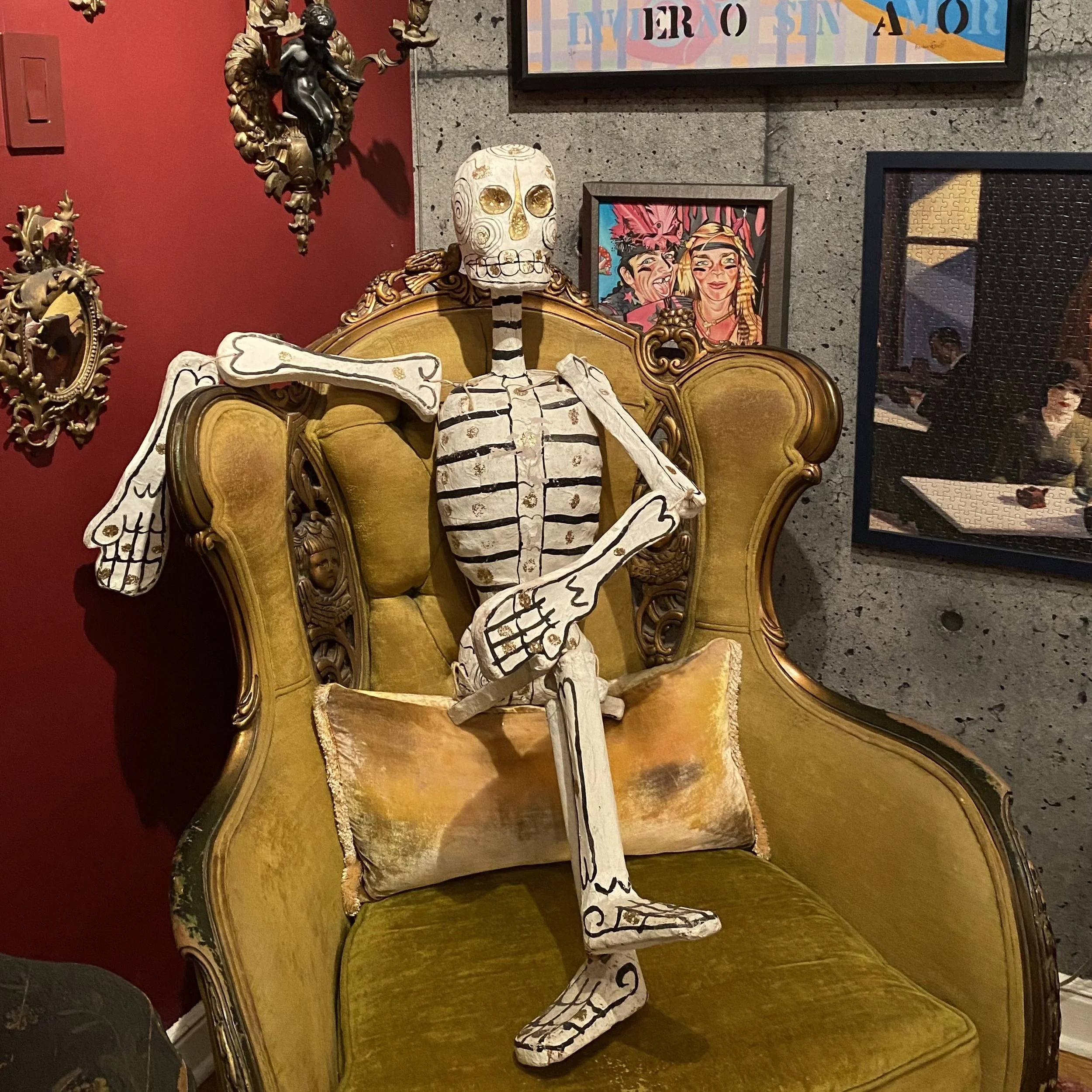
once on display year round, carly now comes out only at halloween. photo credit: michael quinn
…and a photography book of home altars in small Mexican villages. I still return to that book. What touches me isn't just the objects—candles, tinsel, bits of foil and wrapping paper—but the care with which they're arranged. The attention makes them sacred.
That attention is the same thing I find in Frida’s work. Even when confined to her bed during illness and recovery, she looked closely at what she saw. This could be her reflection in the mirror hanging over her bed, her toes along the edge of the tub, or images from her dreams.
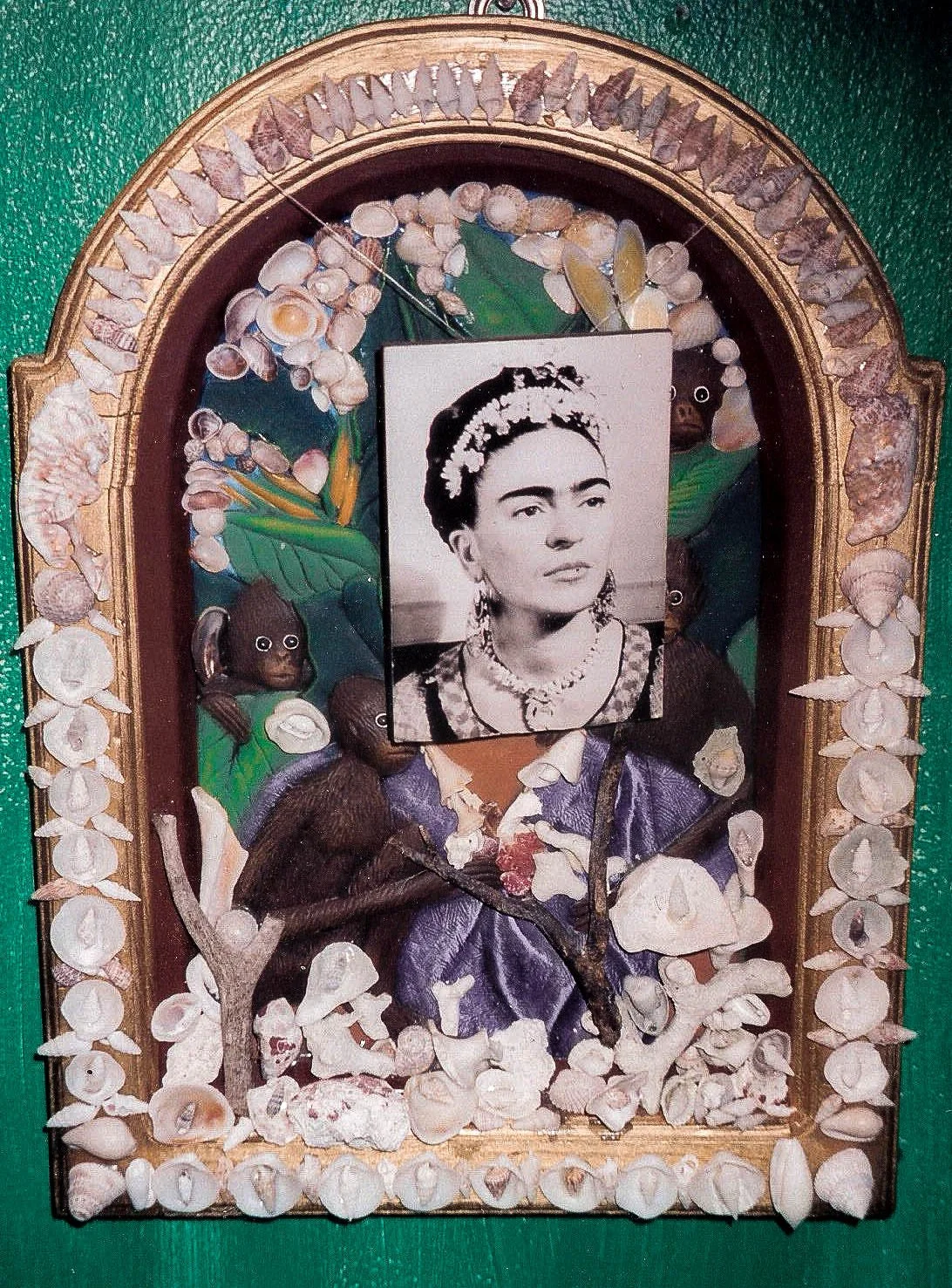
my shrine to frida: my then boyfriend and i picked up this ceramic wall hanging in a grocery store in cancun. when we came back to ny, i covered it with shells we’d collected from mexican beaches. the face looked weird, so i hung this photo in front of it. photo credit: michael quinn
Yet my interest in Frida seemed to exist in reverse proportion to the information available about her. Pre-internet, my interest was huge. Post-internet, something changed. It was like being offered hundreds of plastic bowls when what I collected was handmade pottery.
I lost my taste not only for new things, but for what I already had, including a huge library of Frida-related books. Those stacks once seemed central to my identity. When they no longer felt like “mine,” I gave most of them away.
Recently, a Metropolitan Opera brochure arrived in the mail showing a singer with heavy eyebrows and a painted-on mustache. I felt the old rise and fall of my hopes: interest and annoyance in short order.
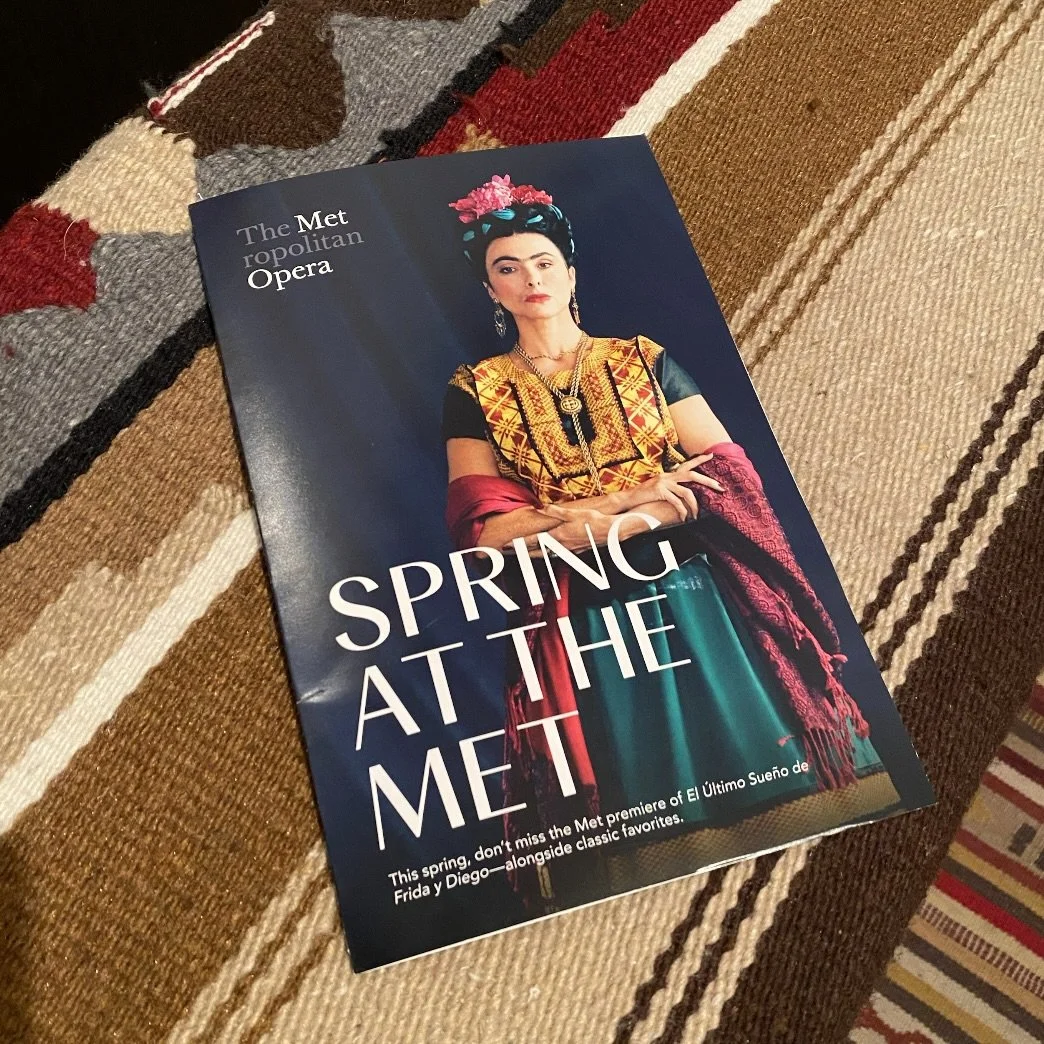
the outfit is everything. the expression? not so much. photo credit: michael quinn
The Met’s production of The Hours put me off opera forever, but I did check out the Frida-related exhibition at the Museum of Modern Art. It’s basically an ad for the Frida opera. A model of the set is on prominent display, alongside a looping video of the creators talking about what an honor it is to work on a production like this—and, of course, how much Frida means to each of them.
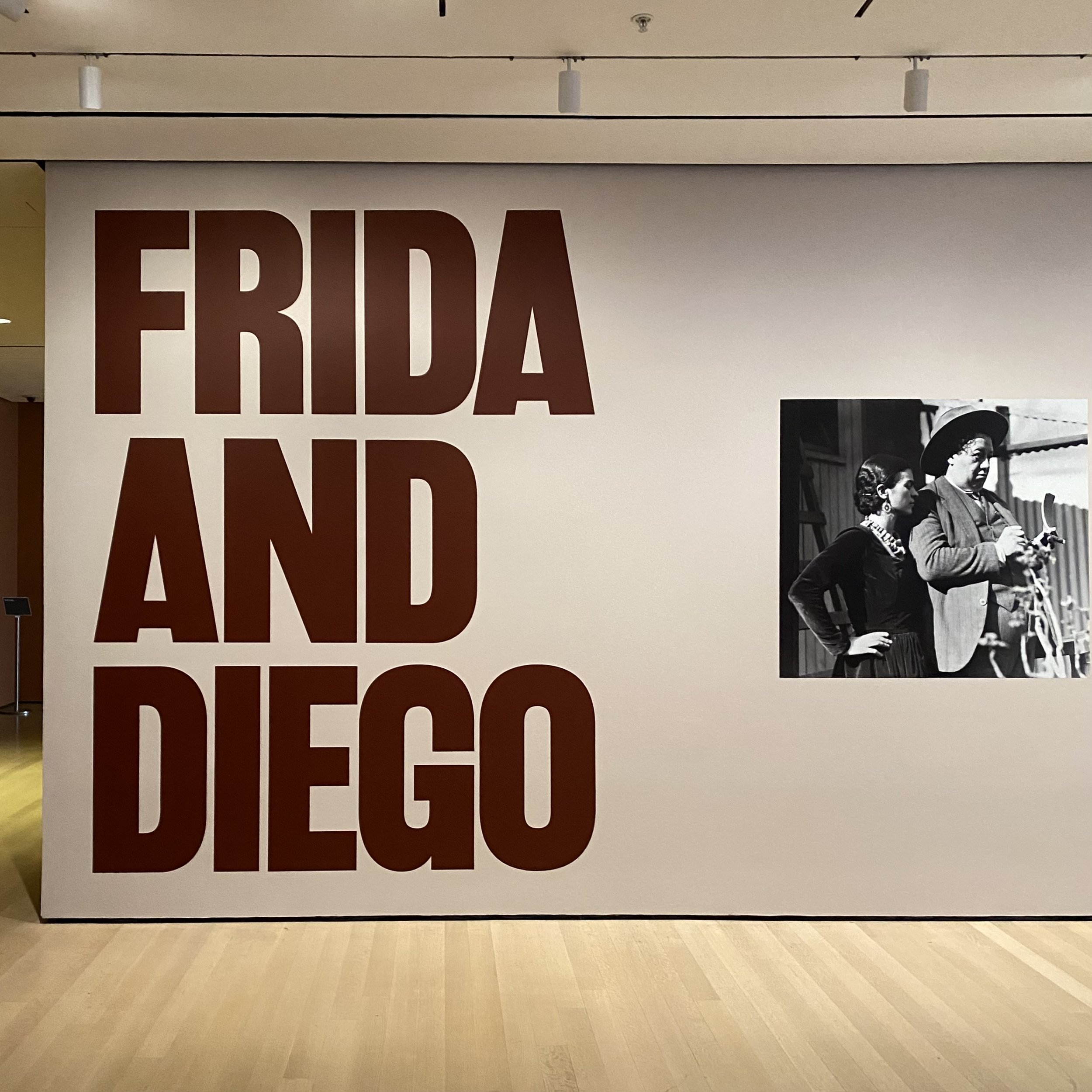
When you’re known by one name, you’ve either made it or it’s over. maybe both. photo credit: michael quinn.
The opera’s set designer also designed the installation at MoMA. What works on stage doesn't work up close. Unfinished two-by-fours frame out the exhibition space; blue drapes made of an industrial fabric hang stiff as a tarp. When I visited on opening day, I thought the gallery was still under construction.

a painting by diego rivera on display at moma. almost blocks out the view of those awful blue curtains. photo credit: michael quinn
But the paintings are always worth seeing.
My Grandparents, My Parents and I (1936) is a fanciful take on Frida’s family tree. She depicts herself as a toddler, a tree growing in place of the leg deformed by polio, standing in her childhood home. Red ribbons rise up through the roofless house, linking her to each of her relatives hovering overhead like ghosts or memories.
At the same time, the painting is grounded in biological detail. Nearby, a sperm meets an egg, marking the moment of conception. As a young person, Frida wanted to be a scientist, and here that interest also becomes part of her origin story.
The work has a childlike simplicity coupled with a grown-up precision. People, plants, the blue sea, a cloudy sky: everything belongs to the same system. Is that system nature, or something even bigger than that?
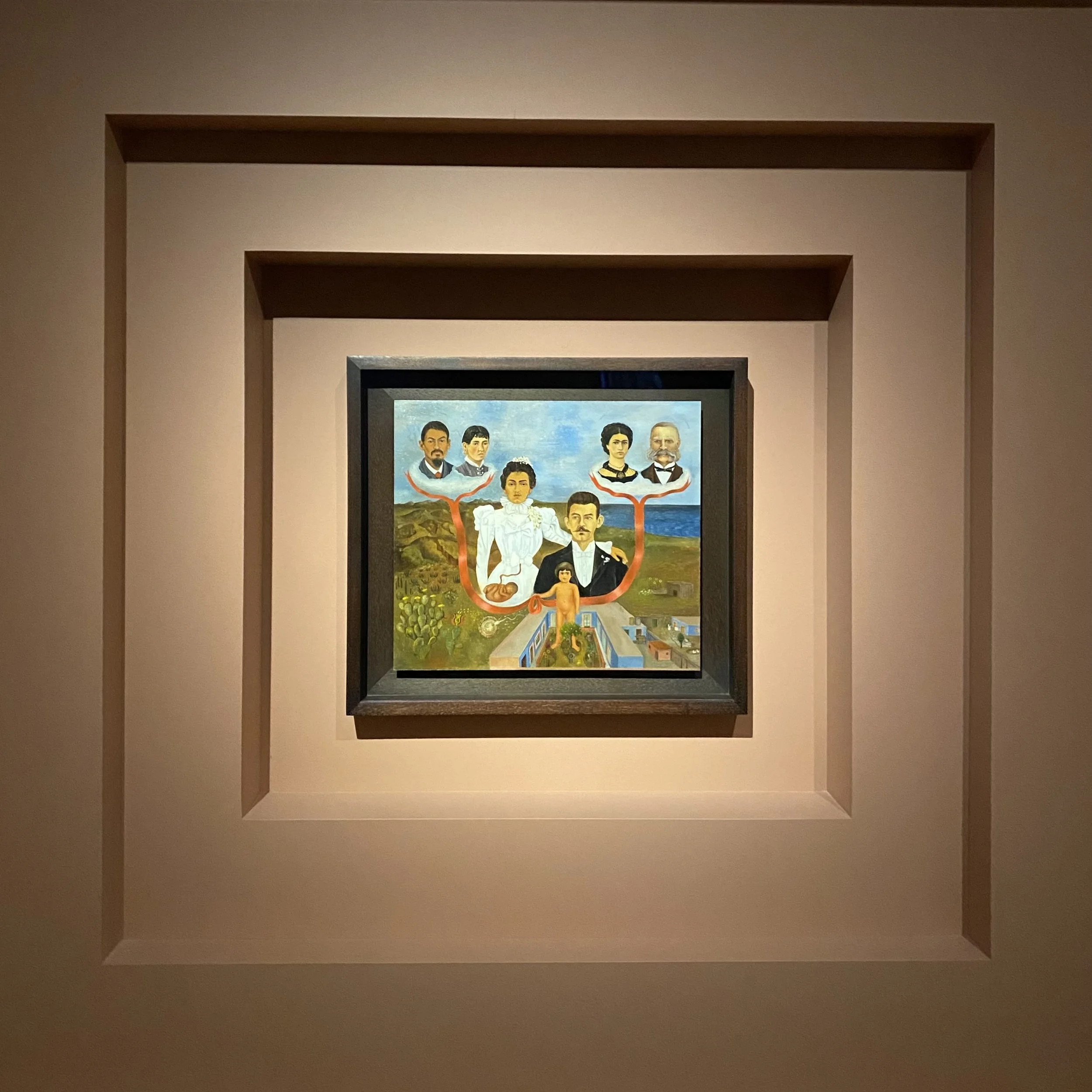
the frame, while visually striking, somehow acts as a barrier to the painting’s intimacy. ugh. photo credit: michael quinn