Tone on Tone: A Monochromatic Picture of Midlife in "Another Woman"
/Some people have closed the book on Woody Allen, judging the man and rejecting his movies. But I fell in love with those films a long time ago, when I was a suburban teenager. I thought I’d live in apartments like the ones in his movies, dress like his characters, talk about my feelings about the world with that particular Manhattan fluency. Allen’s films didn't just shape my idea of what a New Yorker is. They shaped my idea of what a grown-up was.
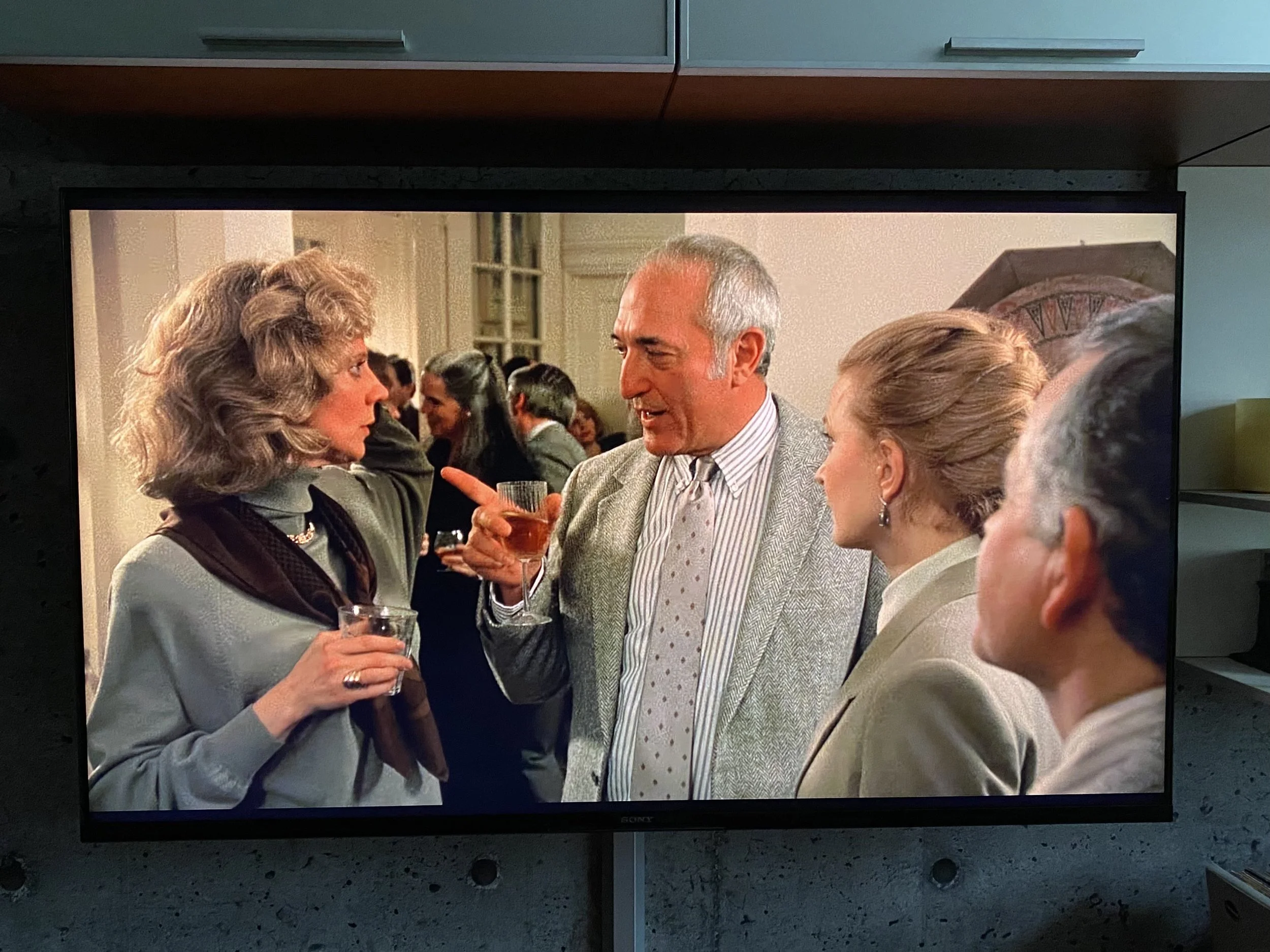
did your eyes go right to the man in grey? it’s not just because he’s in the center, and gesturing with his finger. Look at what he’s wearing (grey tweed blazer, pinstriped shirt, patterned tie) and appreciate how they’re the same color as his hair.
A few years ago I reviewed Emily Nussbaum's book I Like to Watch, which takes up the question of what to do with the art of men like Allen that society has condemned. Whatever kind of person Allen is, his movies have had a profound influence on me. And when I rewatch a film like Another Woman (1988), I see just how much—in ways I’d never realized.

Nussbaum opens one essay with a declaration of her love (particularly as a young woman) for Woody Allen’s movies, now seen in the light of the fact that he has since been accused of “molesting his young daughter.”
In the film, Gena Rowlands plays Marion Post, a fifty-something philosophy professor. She’s on her second marriage, to a cardiologist—a marriage that began as an affair—and lives a lush New York lifestyle: a car, a nice apartment, a second home out East. Marion strides through the world with an imperial air. She believes she knows what's best for everyone, herself included.
When Marion rents a second apartment downtown to work on her next book, she becomes distracted by murmurs of conversation coming through the heating vent in the wall. She finds herself eavesdropping on the therapy sessions taking place in the office next door. The patient is a younger pregnant woman, Hope. The doubts Hope freely airs about her life begin to unspool Marion's certainty about hers.
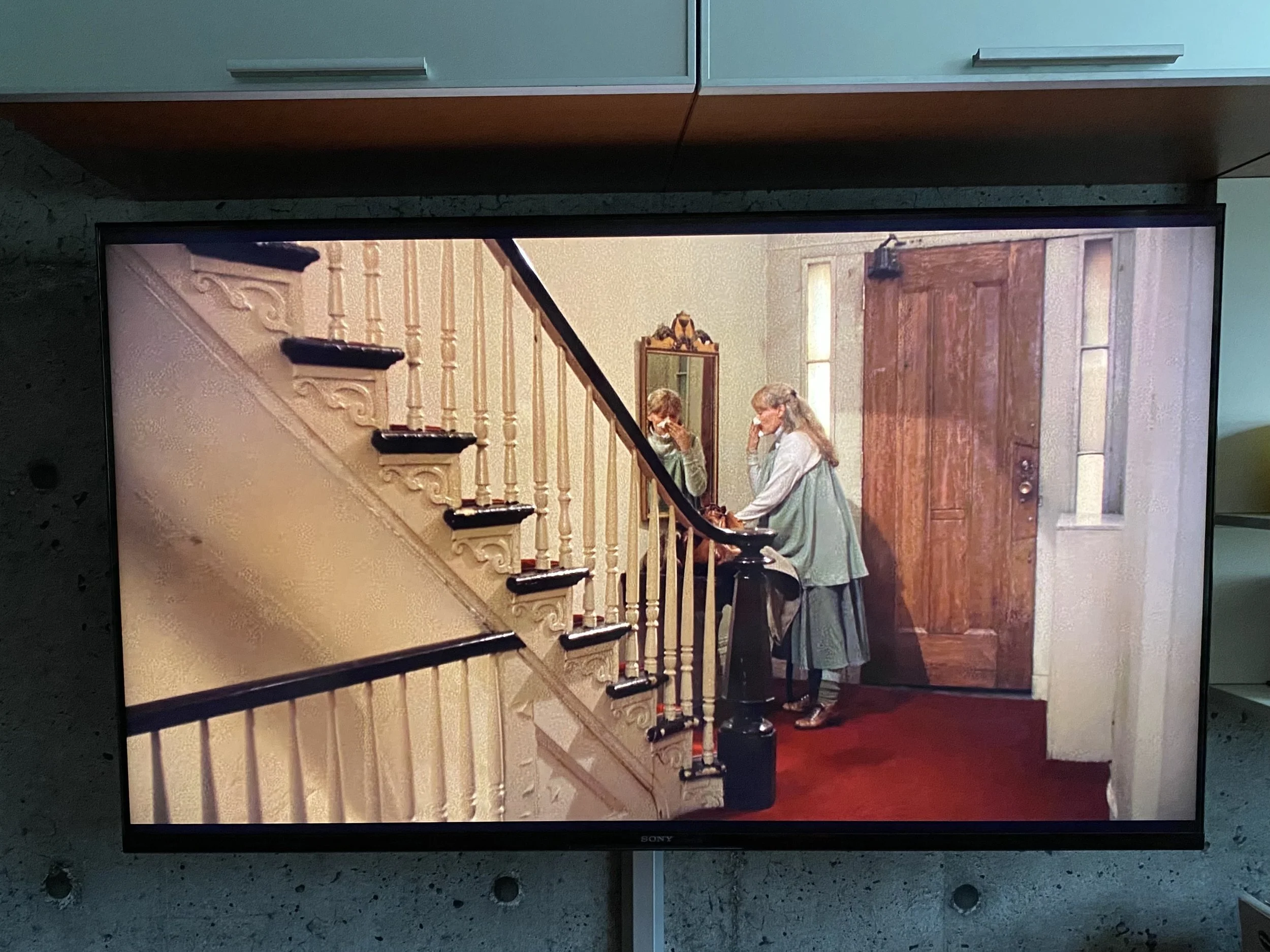
a long trapeze-type tank over a turtleneck, with a matching skirt, paired with tights, fair isle socks, and lace-up oxfords? this kind of bonkers layering really gets my blood going. 10 out of 10. no notes.
I can't think of too many other movies that focus so acutely on this particular stretch of midlife. At one point, Marion reflects on her milestone birthdays: "I didn't think anything turning thirty. Everybody said I would. Then they said I'd be crushed turning forty, but they were wrong. I didn't give it a second's thought. Then they said that I'd be traumatized when I hit fifty, and they were right. I'll tell you the truth, I don't think I've ever recovered my balance since turning fifty."

a distraught marion reclines on a pile of kilim pillows. I love how kurland has split the suit here, putting Marion in an olive jacket with grey pants, a ribbed cashmere turtleneck, and little nude-colored flats. the whole thing is giving me Armani Collezioni vibes.
I turned fifty last year. In some ways, Marion's experience mirrors my own. At fifty, I recognize something of myself in Marion: the tendency to make the practical choice over the passionate one, and to wonder, sometimes, what that has cost. My hair has changed (first grey, now white) and so has my body. My clothes don’t fit the same. Certain colors that once suited me no longer looked right.
I've never been a "pop of color" kind of guy. Working in fashion for a long time—first as a merchandiser, then as a stylist—I’ve always gravitated toward monochromatic dressing. Dressing in one color from head to toe elongates the lines of the body. It makes people look tall and slender. It looks good on everyone.
Over the years, I moved from all black to colors like beige, bone, and cream. I feel especially comfortable now in loose unstructured layers—coat, blazer, button-up—with deep pockets in which to plunge my hands, my book, my phone.
There's something about this way of dressing that excites people. Strangers tell me how much they like it, how much it suits me. I always say it isn't the only color I wear, but it's the one people notice and remember.
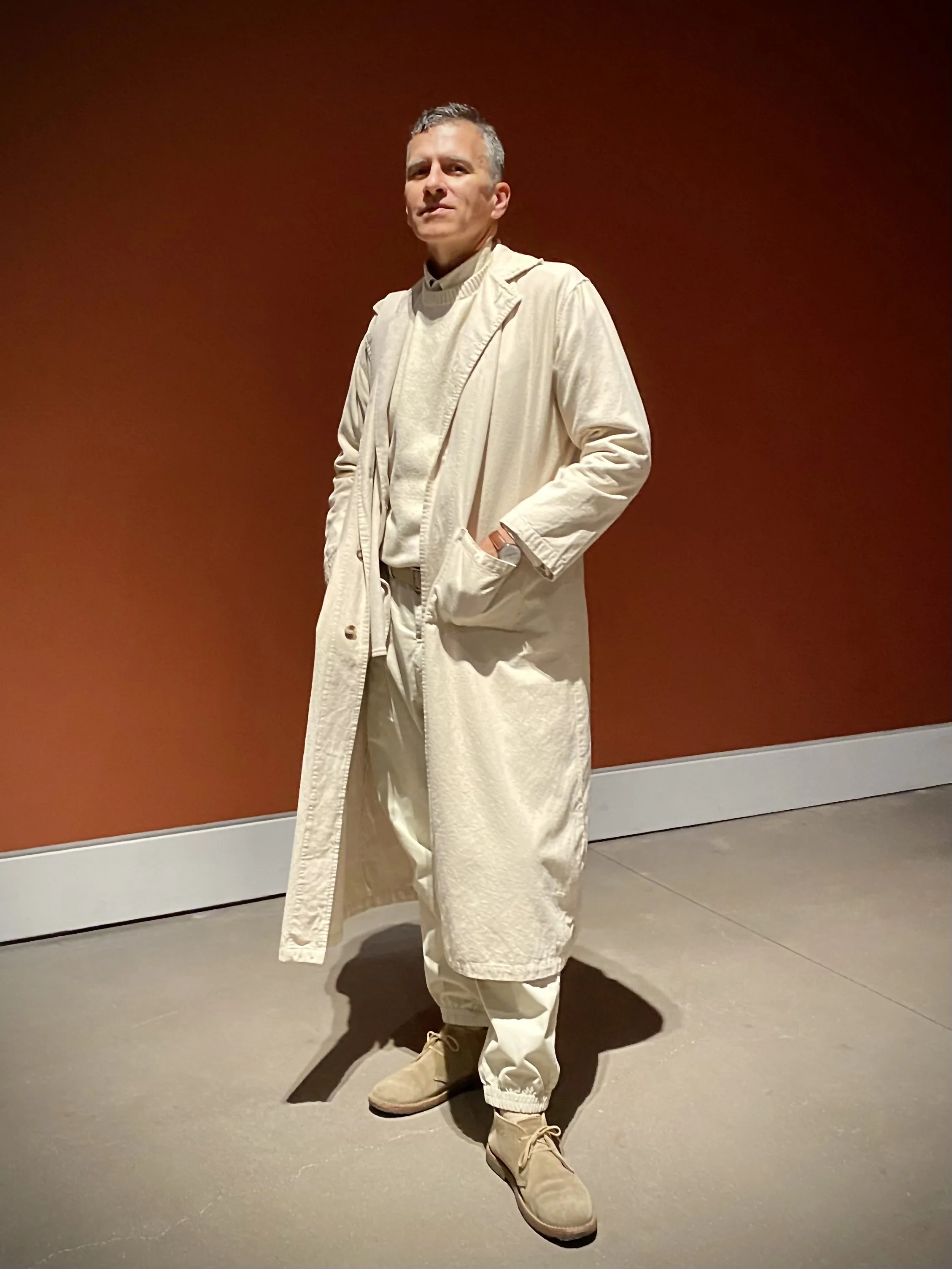
I am really a natural fibers kind of guy. or, as my friend ry referred to her own way of dressing, “neutral and natural.”
I felt that same buzz of excitement seeing the clothes in Another Woman. I thought my ideas about monochromatic dressing stemmed from my time in the fashion world. But now I could see their roots lay here.
What struck me watching the film this time was how costume designer Jeffrey Kurland created such a layered, tonal landscape. Tweed blazers. Belted wool coats. Cashmere turtlenecks. Silk fringed scarves. It's visually rich and completely believable: styled but not overstylized. He seems to have given each character a closet rather than a wardrobe: they repeat outfits, especially accessories, just as we do in real life. And yet they are all tonal. Marion is frequently outfitted in olives and greys.
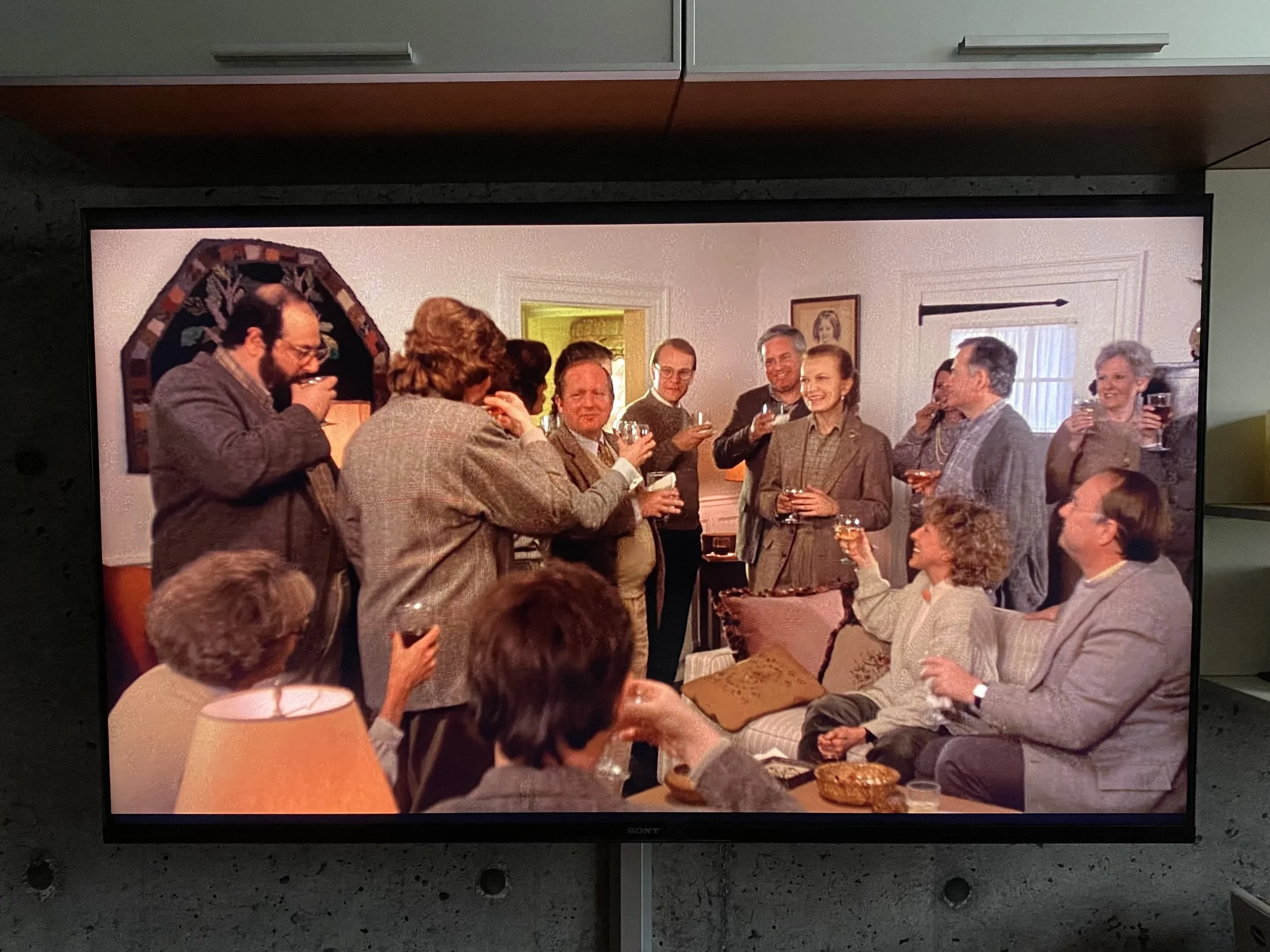
Marion and friends. each outfit looks believable. but look at the overall composition. see how it moves from browns to greys? there’s a master at work here.
Near the end of the film, Marion picks up a book written by a man who loved her—a man she rejected based on a rationalization of her feelings. She flips through it, looking for the character supposedly based on her, and in doing so comes to understand both what she meant to him and what she turned away from. "I closed the book," she says, "and felt this strange mixture of wistfulness and hope, and I wondered if a memory is something you have or something you've lost."
While Marion closes the book, she's opening herself to a new way of being. One look at what she's wearing—a black sweater, a pleated black skirt—tells you how much she's changed.
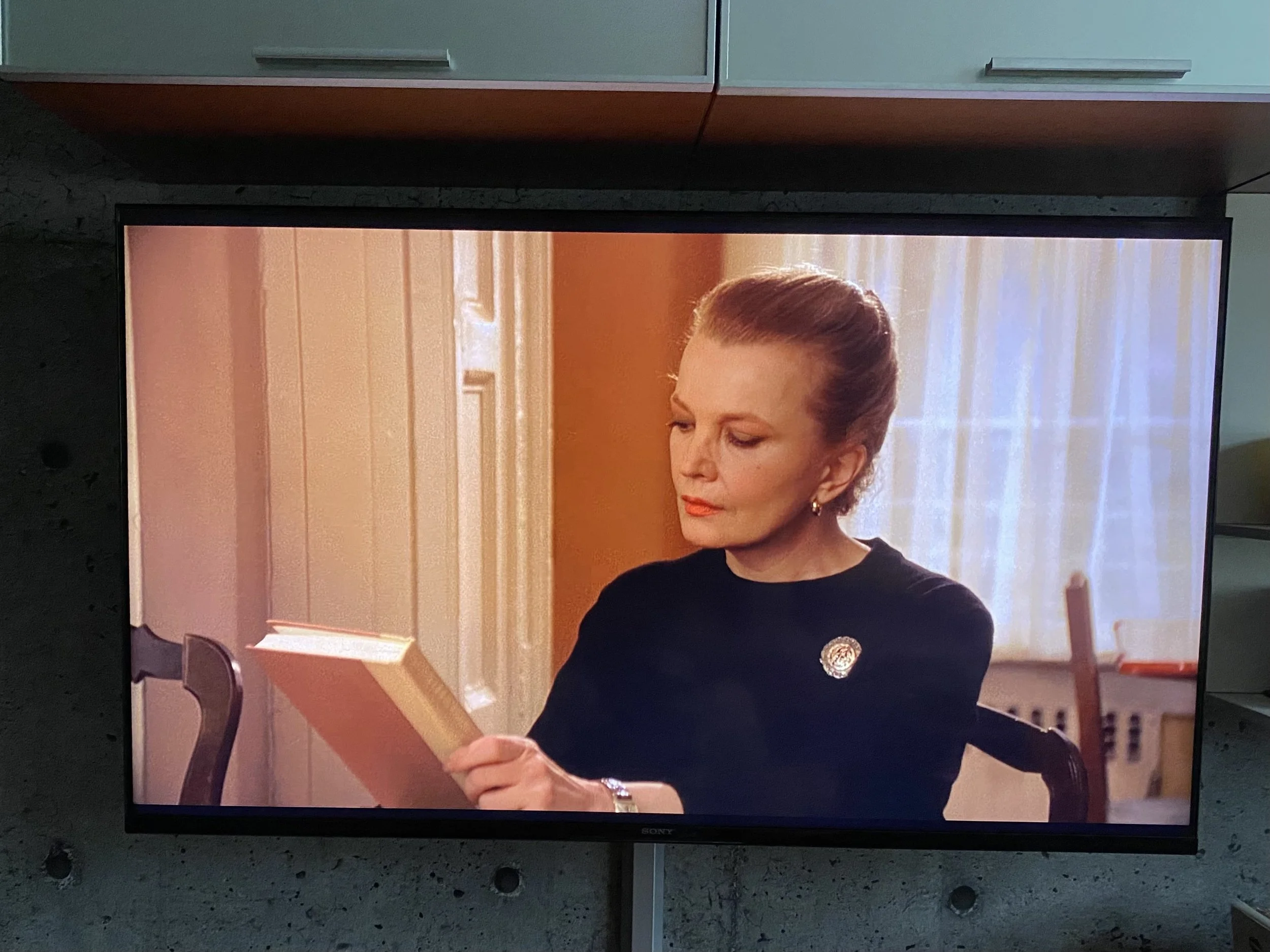
portrait of a changed woman. Marion, whom we have only seen wearing earrings and a watch, now has pinned a brooch onto her black crewneck sweater, like a badge of courage.