A Little Something Extra

January always feels like a sharp clap of the hands.

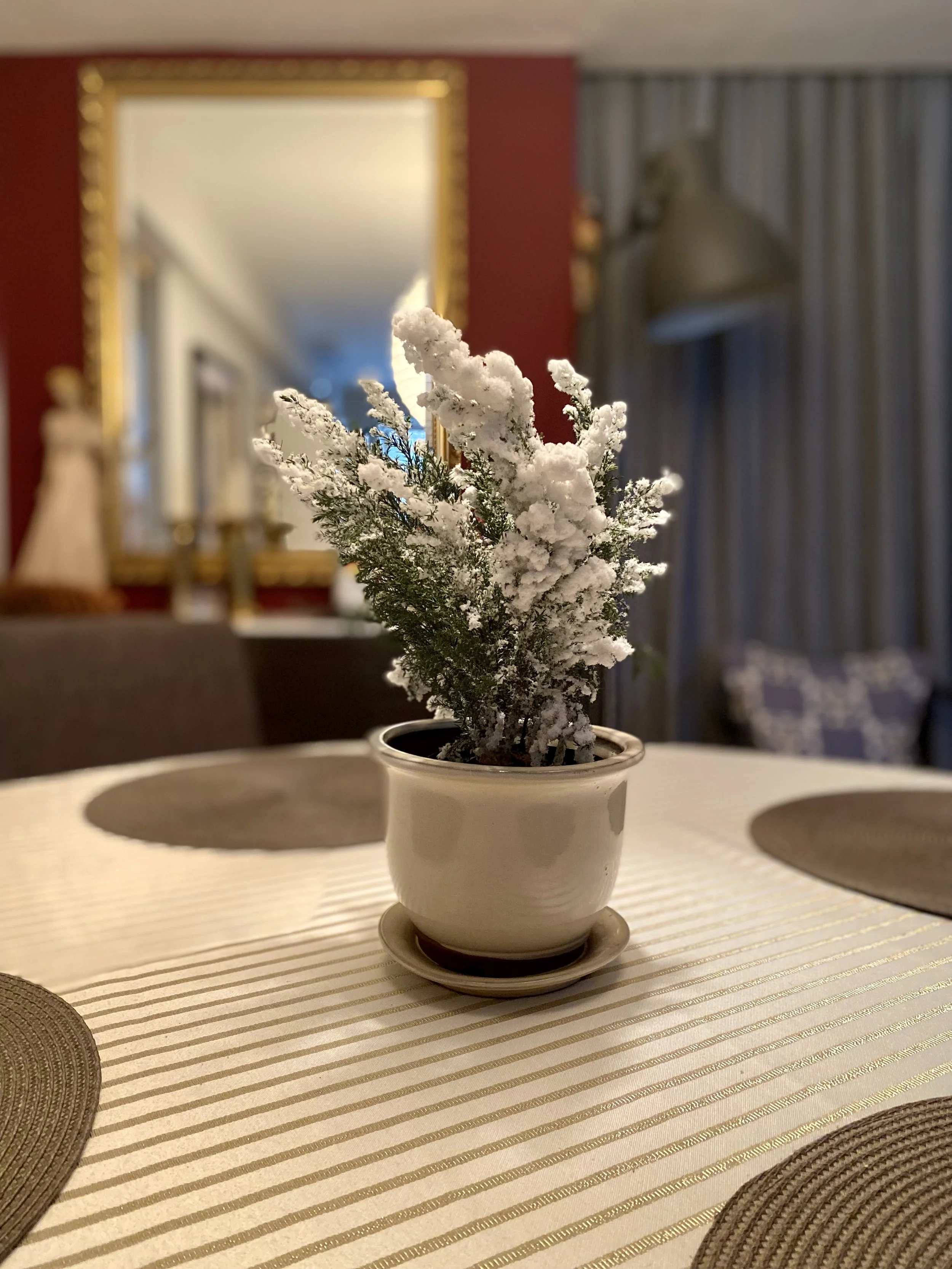
The dining table is set with a crisp white cloth. A small flocked tree sits in its center—a living tree coated with some white chemical meant to resemble snow. My mother gave it to me before Thanksgiving. At the time, I didn’t know what to do with it. I felt sorry for it. Then I felt responsible for it. I still do. It sits now in a handmade pot I found by the mailboxes, something a neighbor was giving away. The saucer is a little crooked. The wonkiness is what gives it its charm.


My partner, Rainer, and I have put the Christmas things away. We carried our big tree to Prospect Park, and tossed it onto a pile of others, like a green barricade. For the next few weeks, we’ll smell pine when we walk by the mulch made from these trees, and I’ll think of our beautiful old tree and wonder, Is that you?

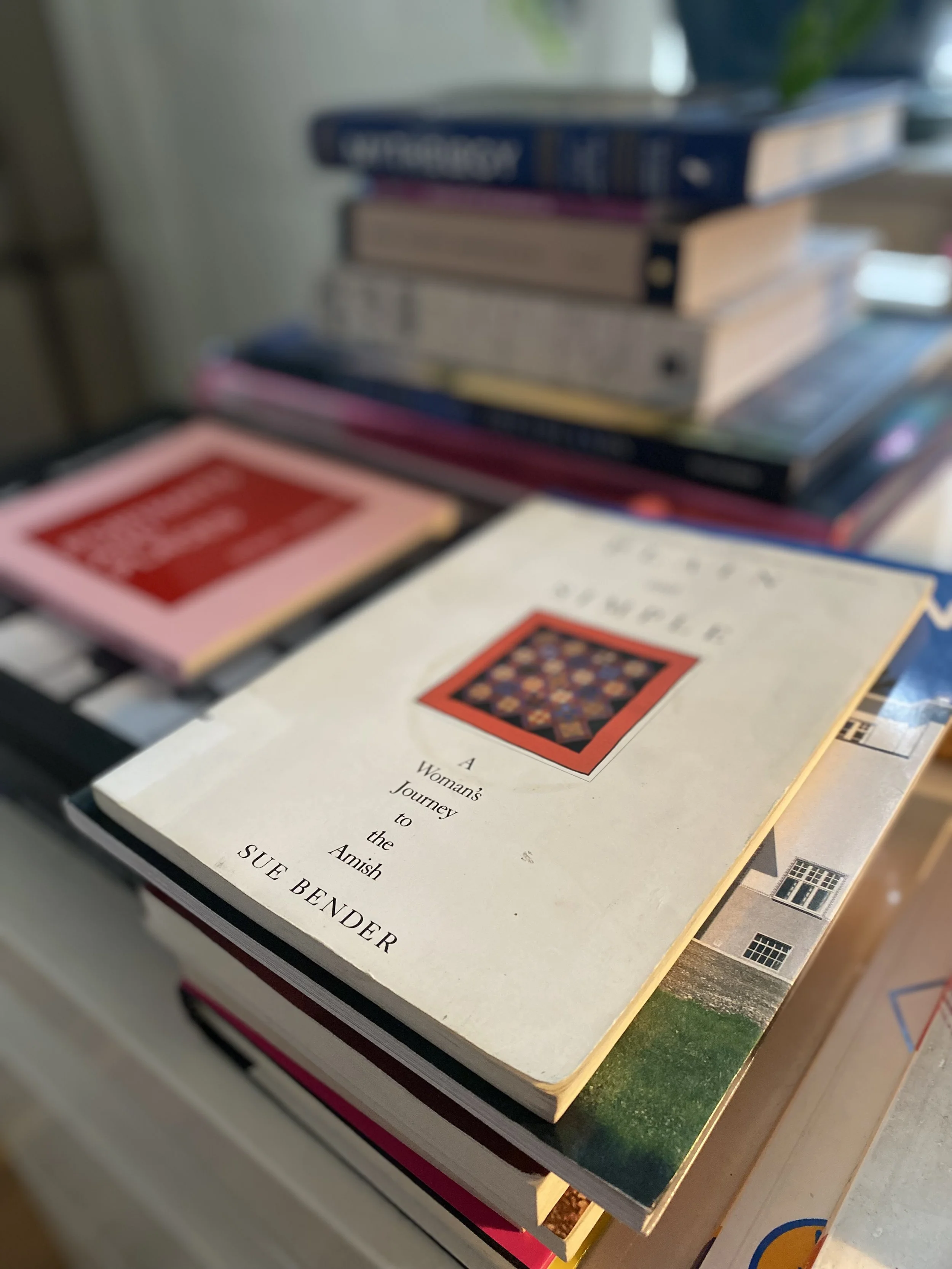
Over the holidays, I read Plain and Simple, a book by Sue Bender, an artist and psychologist who became obsessed with Amish quilts and dolls. She arranged to live among the people who made the objects she admired, propelled by an idea of who she thought they would be: plain and simple themselves. Their reality sometimes unsettled her (one family ate sugar on everything for breakfast) but it only deepened her fascination. And her admiration.

The book was published in 1989. Bender died last year, and when I read her obituary in The New York Times, I realized I half remembered the book from when I was young. Its ethos had been around in my childhood: an appreciation for old, beautiful, utilitarian objects. My mother liked things like that. I do too.

Reading it made me think about how taste clarifies with time.


My first boyfriend had an enormous influence on me. Kevin was an artist, with a ring of fire tattooed around his wrist. Because of him, I adopted a pair of flame-colored Creepers as my shoe of choice in the ’90s. We lived in an East Village studio apartment filled to the brim with secondhand finds we scrounged for at flea markets, thrift stores, and on the street on trash night. Our place was crowded with colorful things.

We lived not far from the artist John Derian’s store and used to walk by, admiring the things in the window, too intimidated by the imagined prices to go inside. Then one year a collection of ghost-shaped washcloths urged us to cross the threshold—our bathroom had a spooky, gothic theme. Each washcloth had two faces—one smiling, one frowning—depending on your mood. Ours hung on the back of the bathroom door, frowning, for years.

Shortly after the start of the new century, we moved to a parlor-floor apartment in Brooklyn, with tall ceilings and more room for our things to spread out. We made the move because we wanted more space. It turned out we did—from each other. When we broke up, there were literal and figurative holes to fill.

At the time, I was working as a window dresser and visual merchandiser for high-end retailers. Professionally, I excelled at restraint. At home, I was still a maximalist. One Thanksgiving, a guest I didn’t know well looked around and said, “It doesn’t look like the home of someone who works at Armani.”

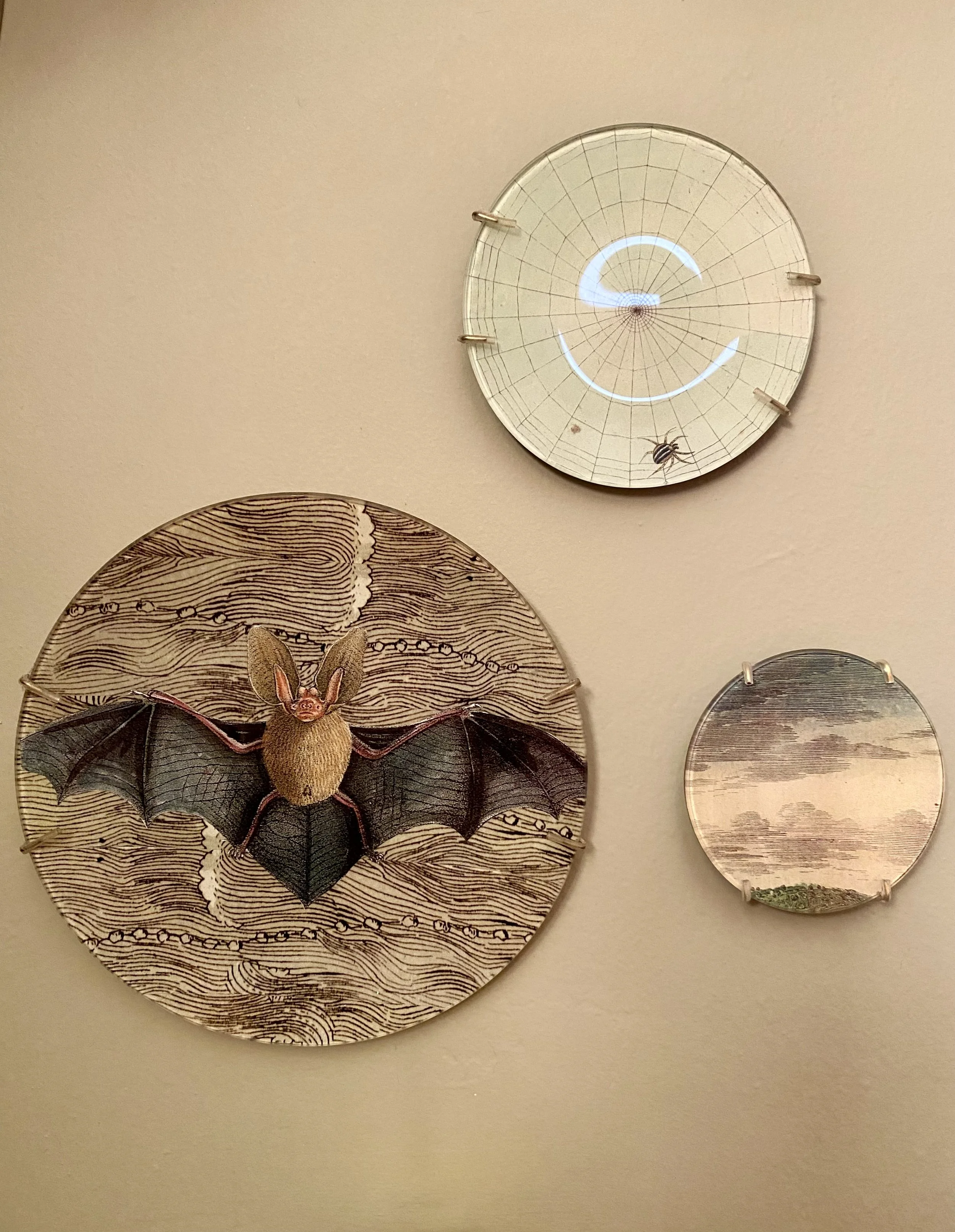
I was freelancing at Tiffany’s when my friend came up to me clutching a copy of the Times: John Derian was having a sample sale. We each bought a small plate with a flaw. Mine showed a spider, with a tiny fleck of brown paper accidentally caught in its web.


That plate is part of a collection that hangs on the bathroom wall of the apartment I share now with Rainer. Our place reflects who we are as a couple. And as individuals—I got rid of a lot before I moved in. Rainer likes Italian-style modernism. I still like old things: primitive wooden benches, brass candlesticks, earthenware pottery from Mexico. We’ve gotten many little treasures from John Derian over our 10 years together, and every Christmas we make a special pilgrimage to pick out a new ornament. Or at least I try to limit it to one—maybe one each. Rainer raises an eyebrow if I try to go overboard. Once, when we were clearing the clutter from his mother’s living room to make room for her Christmas things, he said, “Feel free to reduce.”

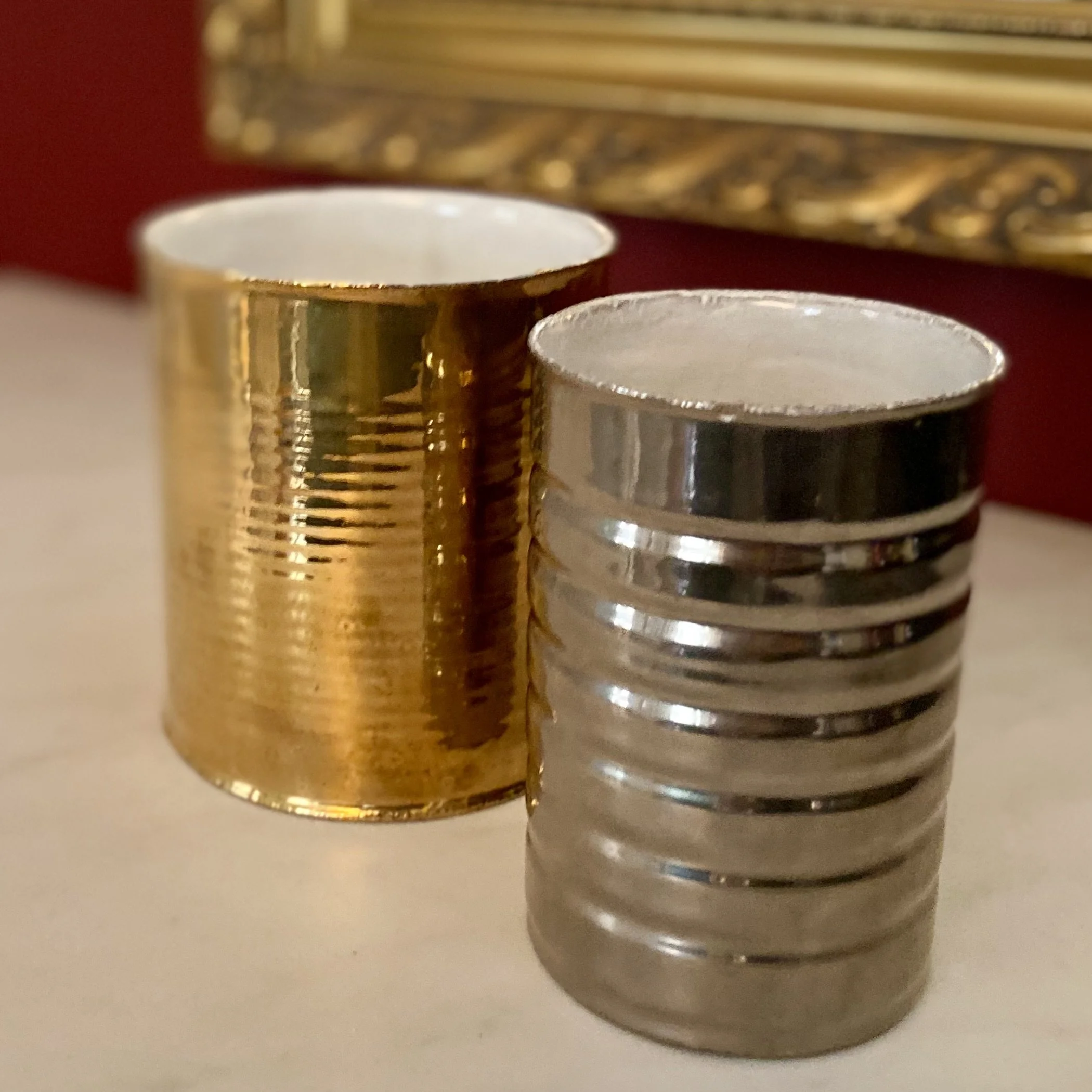
Yesterday, John Derian had another sample sale. Although there was nothing I needed, something compelled me to go. I walked through the neighborhood I’d lived in twenty-five years earlier. Much had changed, but John Derian was still there, shining like a beacon. I left with two small porcelain vases I’d long admired. Made of very fine porcelain, they’re shaped like tin cans: one silver, one gold.


Plain and simple. But with a little something extra.