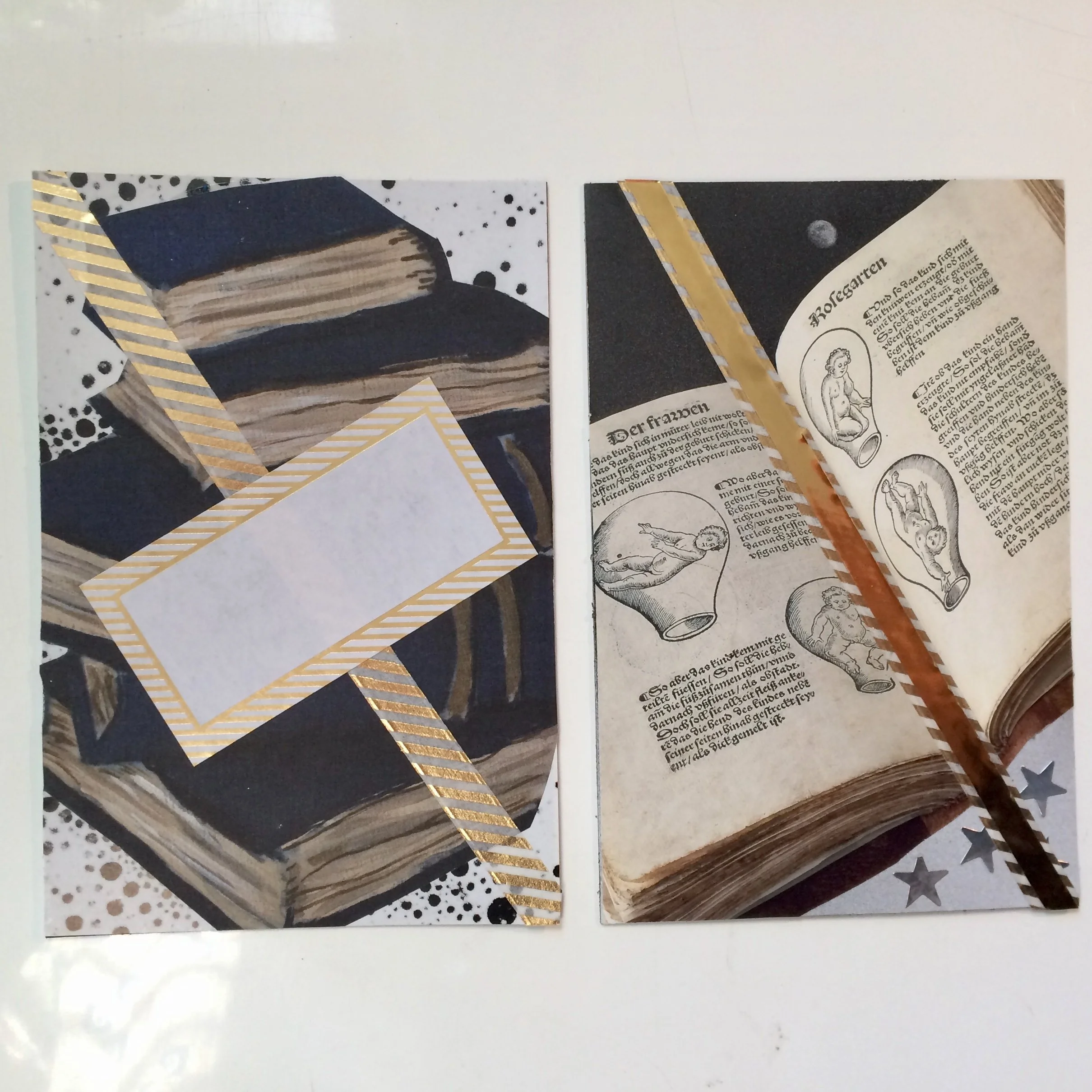
Louise Hay: The First and Last Voice I Hear
/I don't think there's another person who has influenced the way I think more than Louise Hay. She was a prolific writer and teacher, best known for her international bestseller, You Can Heal Your Life (1984), a manifesto of radical self-acceptance. Affirmations are the heart of the work—swapping out negative thoughts for positive ones. “What we believe about ourselves and about life becomes true for us,” Louise writes. Even if we think we hate ourselves, she points out, “it's only a thought, and a thought can be changed.”
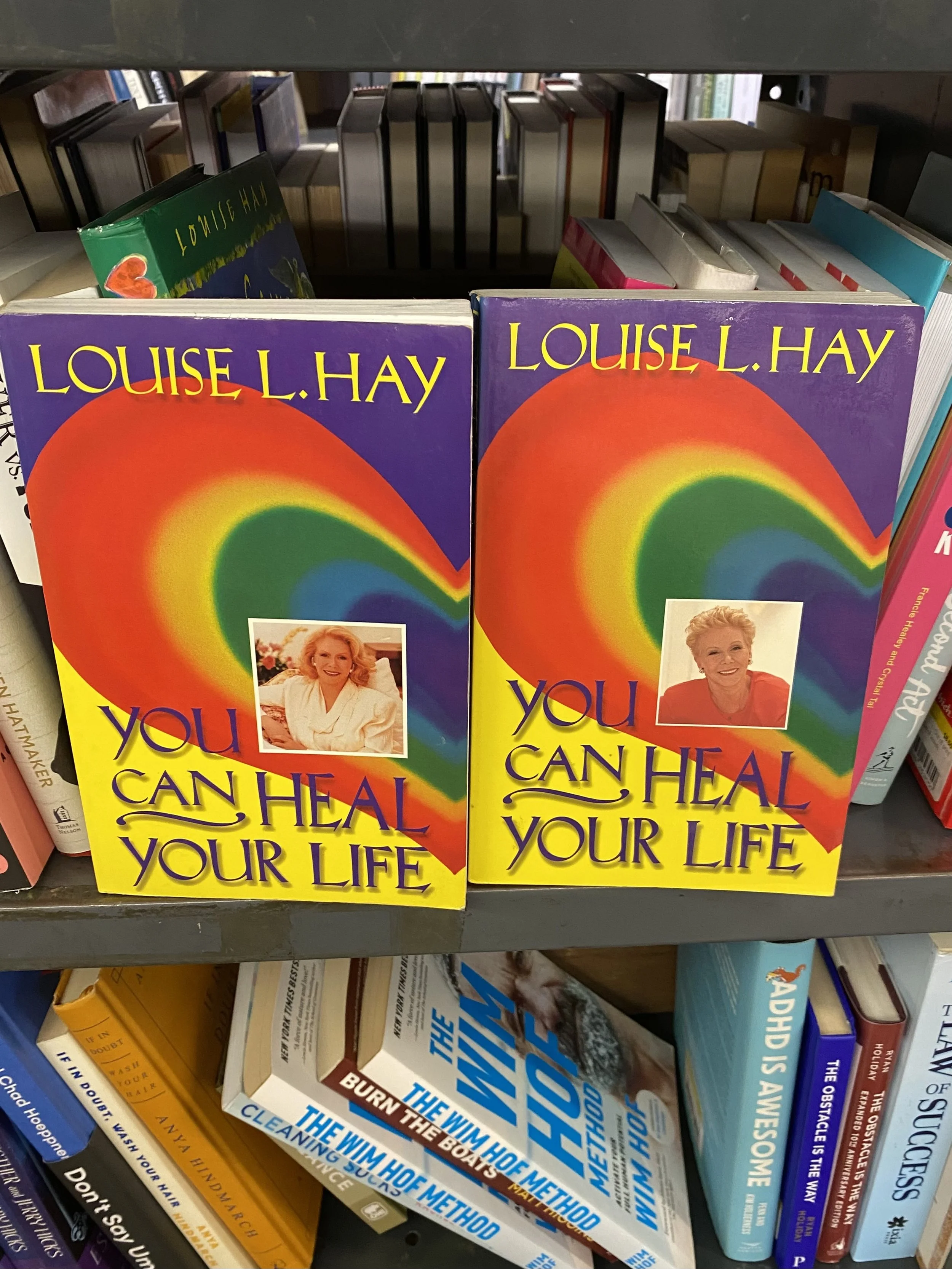
Louise in the stacks of used books at the Strand. She had a new author photo for each reprinting. as the times changed, so did her look: “Each old layer must give way in order to be replaced with new thinking.”
I'm not a positive thinker by nature. I'm more of a catastrophist, to be honest with you. As I've gotten older, it seems my anxiety has only gotten worse. Hearing Louise's voice calms me down—her audiobooks are all over YouTube, along with clips of her addressing live audiences, and guiding viewers through a sample session. The opening graphics are primitive: rainbows, hearts, a spinning globe. The recording quality is often terrible, which somehow adds to their charm. Louise looks gauzy in a tie-dyed skirt suit or a puffy-sleeved blouse.
I put these recordings on while I iron. I listen to Louise’s morning meditation when I wake up and her evening meditation when I go to sleep. On most days, her voice is the first and last one I hear.
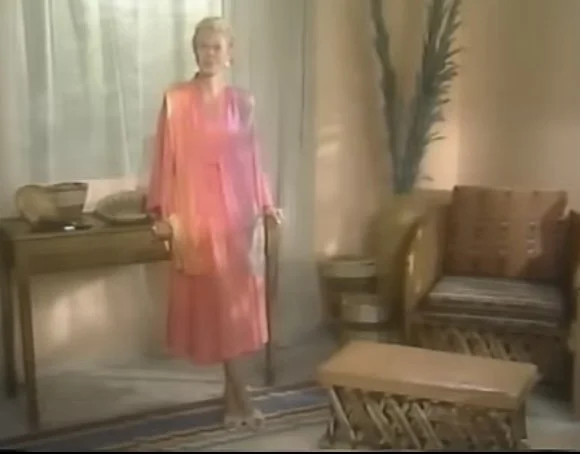
Louise “at Home” (in the studio), looking perfectly at home in new age pink tie-dyed silk layers against the earth-toned and natural textured furnishings.
You Can Heal Your Life is one of the few books I keep on my desk for reference, along with Merriam-Webster’s Collegiate Dictionary and a fairly recent copy of The Chicago Manual of Style. Her book is, for me, another essential tool of my trade. Louise’s writing is simple, direct, and full of personality. “I can remember when I used to awaken in the morning and say with a groan, 'OH GOD, ANOTHER DAY.' And that is exactly the sort of day I would have, one thing after another going wrong,” she writes.
Louise had reason to grumble. Born in California shortly before the Great Depression, she was abandoned as a toddler by both parents after their divorce. At five, she was raped by a neighbor—and was then told it was “all your fault.” At sixteen, she gave birth to a daughter she put up for adoption. She drifted across the U.S., eventually finding work in New York City as a showroom model. She also married, but after fourteen years her husband left her for another woman. Louise found support in the Church of Religious Science, writing, “While their message was new to me, something within me said ‘Pay attention.’”

opening graphics featured primitive animations such as these hearts circling the one place we all call home, earth.
Through the church’s teachings, Louise came to understand that any problems we have stem from one of four areas: resentment, criticism, guilt, and fear. We can't change the past, but we can change our thoughts about it. Forgiveness is key. “We are all victims of victims, and [our caregivers] could not have possibly taught us anything they did not know,” she writes.
Controversially, Louise argues that we play a role in creating illnesses in our bodies. Yet it was her own cancer diagnosis that really put her ideas to the test. She focused on releasing resentment, especially about her rotten childhood. She claims to have healed herself, aided by changes to her diet and alternate therapies such as foot reflexology. “Some of it was pretty weird, but I did it anyway,” she confesses.
In the AIDS-epidemic era, Louise’s ideas gave some gay men hope and made others feel like she was victim-blaming. Searingly, she equates gay men's preoccupation with youth and beauty to a death wish: “It is almost better to die than grow old.”
Yet Louise showed tremendous compassion for gay people, whom a large segment of society still shuns. During the height of the AIDS crisis, she created a weekly support group in Los Angeles called “the Hayride,” an opportunity for gay men to show solidarity while practicing self-acceptance. A short documentary about this phenomenon, Another Hayride (2021), was my introduction to Louise. I wish I'd discovered her years earlier, before so many of my misguided ideas about life had hardened into crippling beliefs that limited what felt possible for me, especially in love. A kind of internalized homophobia often left me feeling not good enough, something Louise understood perfectly. “While it is often deplorable the way straights treat gays, it is tragic the way many gays treat other gays,” she writes.
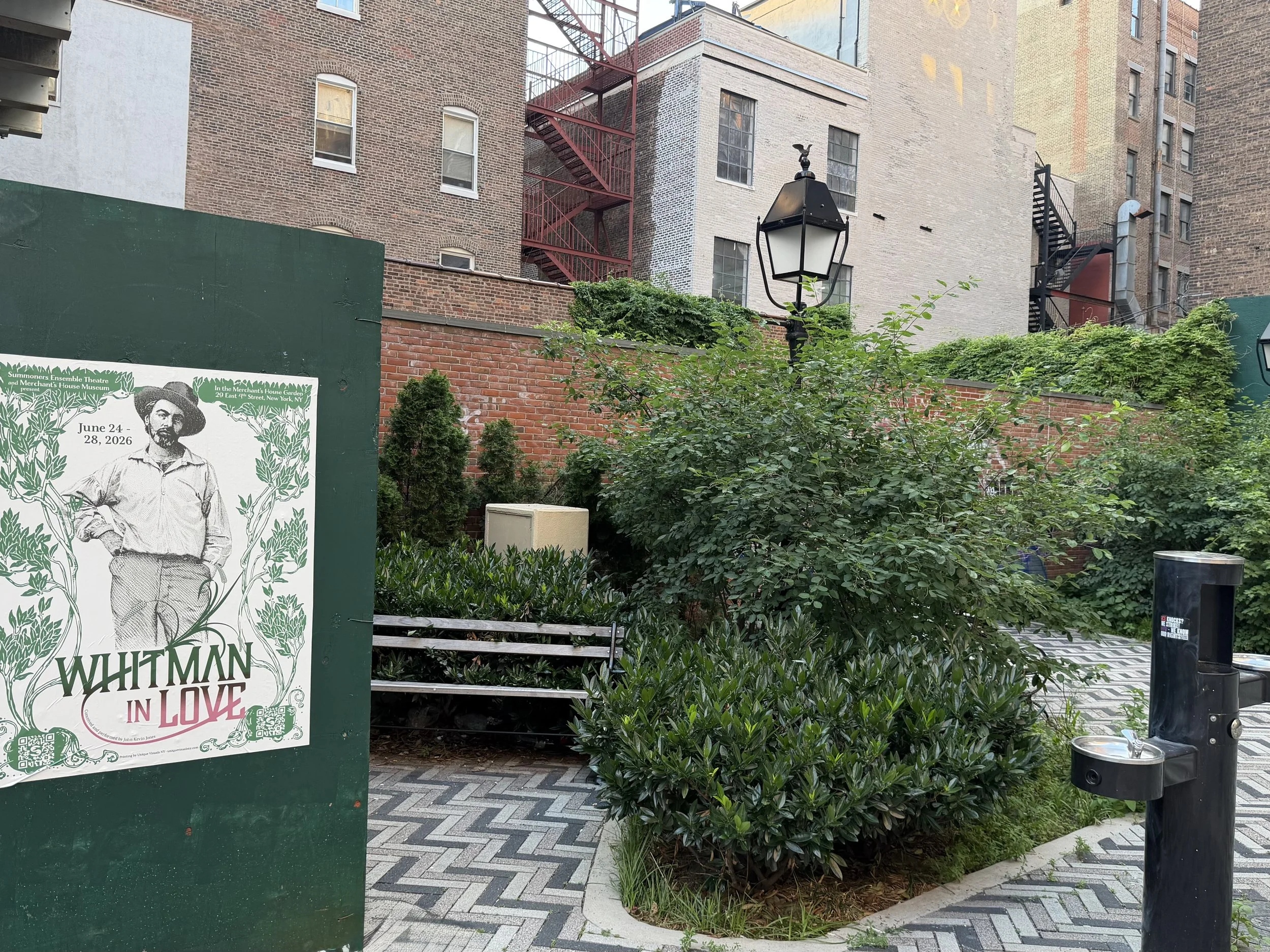
A one-man show in noho, performed in the beautiful garden of the 19th-century landmarked Merchant’s house museum.
I recently got together with an older gay friend, a poet in his seventies, to see a one-man show about Walt Whitman's love poems. “Do you know the work of Louise Hay?” he asked me, seemingly out of nowhere, before the play began. But once he mentioned her name, I could see her ideas in play in how he lives his life: no matter what challenges he faces, he finds something to be grateful for. He moved to New York from Louisiana as a young man to be an artist, driving a cab for years to make ends meet, then writing about driving a cab—everything was fuel for his art. Uber and Lyft eventually ate into his earnings. At a certain point, he realized he was struggling against something inevitable and gave it up, with a shrug. His eyesight is now failing. He may give up writing, too.
The willingness to change is something Louise touches on often in You Can Heal Your Life: “Each old layer must give way in order to be replaced with new thinking. Some of it is easy, and some of it is like trying to lift a boulder with a feather.” Louise recommends reading the book twice, the second time slowly, in order to do the prescribed exercises. This takes more time than you would think, at least for me. My resistance in certain areas must be strong.
Louise uses a technique called “mirror work,” where you’re directed to look yourself in the eye (speaking to the little child within) and say things like “I am willing to change” and, most important, “I APPROVE OF MYSELF.” “Do this three or four hundred times a day, at least,” she writes. Repeating this mantra is “a guaranteed way to bring up everything buried in your unconscious that is in opposition,” she writes.
At first, this was easy. Looking into my own eyes brought a smile to my face. But just as often I've noticed how much I avoid looking in the mirror at all.

The setting sun on the face of old buildings often stops me in my tracks and overwhelms me with some unnameable emotion.