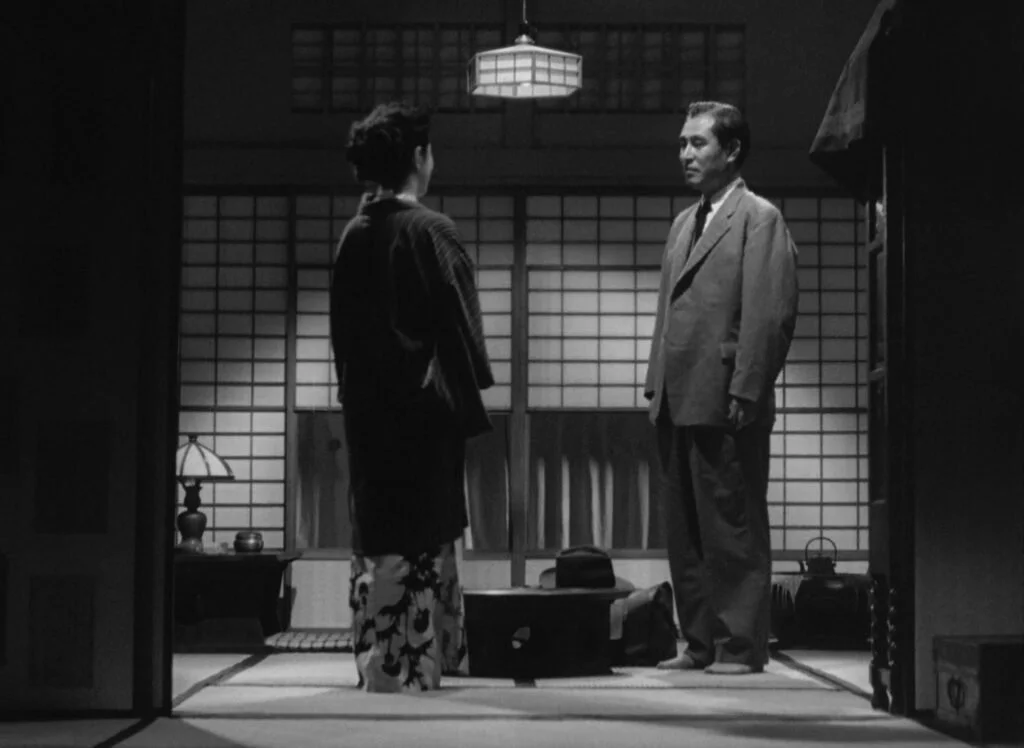
Taeko is from Tokyo. Her husband, Mokichi, is from the sticks. He has a good job. They live in a nice apartment with a live-in maid. But Taeko looks down on him.
She can’t stand the way he slurps when he eats. When he comes into a room to talk with her, she stands up and leaves.
She makes a game of lying to him, saying she needs to leave town when really she wants a weekend away with her friends. The hotel overlooks a fishpond. She compares him to a large gray fish swimming among orange ones and says, “Look, there’s Mr. Bonehead.” Her friends laugh, but privately look down on her for being so mean.
Meanwhile, Taeko’s niece, Setsuko, is of marrying age. Family members work to arrange a match for her. Setsuko protests, calling the whole thing “feudalistic.”
Talk some sense into her, Taeko tells Mokichi.
What’s the point? he asks. They’ll just make another couple exactly like us.
She may have an even lower view of their marriage than he does, but hearing him say so gives her something new to be angry about.
Taeko leaves town. Mokichi is called abroad for business. He sends a telegram asking her to come back. She doesn’t. Her friends see his plane off and frown at her absence.
Then she returns home. So does he. Plane trouble, he explains. They had to turn around.
It’s the middle of the night, and he’s starving. The servants are asleep. They tiptoe into the kitchen and try to make a meal. They find leftover rice. He pours tea over it. The taste reminds him of home.
Try it, he says, slurping.
She does.
It’s good, she’s surprised to discover.
And suddenly she realizes how much she’s been missing—and how much she stands to lose. What if his plane had gone down?
I’ve been horrible, she confesses. And they both laugh.
Finally, something they can agree on.